

Blog Article
Walk into any bookshop and you will find dozens of colouring books for children, all bright and cheerful on the cover. Yet a book that keeps one child happily busy for an hour can leave another frustrated within minutes. The difference is usually not the child. It is whether the book matches their age, their hand control and what they are genuinely interested in. This guide will help you choose a colouring book your child will actually enjoy and come back to.
Why Colouring Is Worth the Time
Colouring looks simple, but it asks a young child to do several things at once. They hold a crayon or pencil, control how hard they press, try to stay near a line, choose colours and stay with one picture until it feels finished. Done regularly, this kind of play can help children practise pencil grip, hand-eye coordination and patience, the same skills they will later need for writing.
It is also one of the easiest screen-free activities to set up at home. All you need is a book, a few crayons and a table. Many parents find a colouring session is a calm way to settle children after school, before dinner or on a long journey.
Ages 3 to 4: Big Pictures and Thick Outlines
At this age, children are still learning to control a crayon, so the most important thing is simplicity. Look for large pictures, thick outlines and plenty of open space with very little fine detail. Familiar subjects such as animals, toys and everyday objects work best, because children enjoy naming what they are colouring. Do not worry if the colour goes outside the lines. At three, the goal is enjoyment and practice, not neatness.
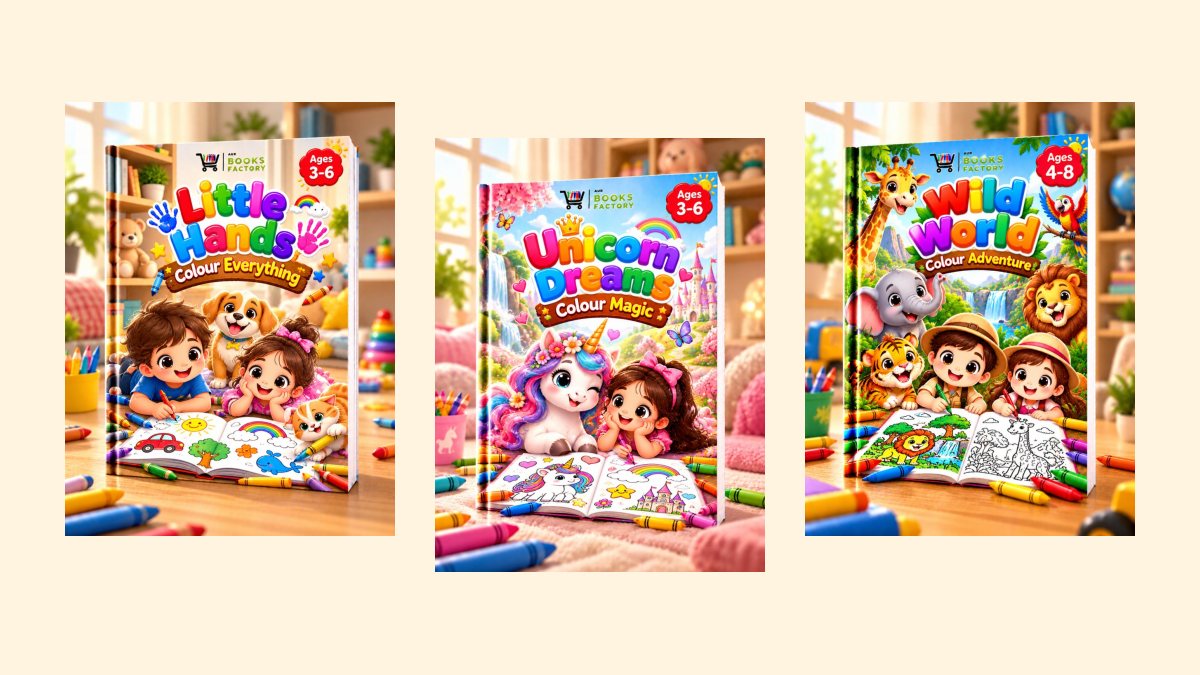
Good starting points from our Original Colouring Collection include Little Hands Colour Everything, which mixes animals, vehicles and everyday objects, Happy Hooves Colour Farm with friendly farm animals, and Paws and Whiskers Colour Fun for little pet lovers.
Ages 4 to 6: Let Their Favourite Things Lead
By four or five, most children have strong favourites. Some cannot stop talking about cars and trucks, others love dinosaurs, sea creatures or unicorns. This is the age when a theme matters most, because a child who loves the subject will sit longer and try harder. Pictures can now have a little more detail, such as a background scene or two or three characters on a page.
- For vehicle fans: Colour the Car Carnival, Big Wheels Colour Crew and Diggers and Dumpers Colour Crew
- For animal lovers: Jungle Pals Colour Safari, Splashy Sea Colour Club and Cozy Critters Colour Club
- For little dreamers: Unicorn Dreams Colour Magic and Colour a Castle of Dreams
- For dinosaur fans: Dino Stomp Colour Party
Ages 6 to 8: More Detail, Scenes and Stories
Older children usually want more of a challenge. They enjoy detailed scenes they can spend several sessions on, and pictures that tell a small story, like a pirate ship searching for treasure or explorers meeting wild animals. This is also a good age to mix colouring with other activities such as simple mazes and dot-to-dot puzzles, which keep things fresh.
Books that suit this stage include Roar and Explore Dino World, Pirates and Treasure Colour Quest, Fairy Garden Colour Magic, Sports Stars Colour Challenge and Mazes, Dots and Colours Fun Book.
What to Check Before You Buy
- The age label: treat it as a guide, not a rule. A confident four year old may enjoy a book marked 4 to 8, while a younger child may be happier with simpler pictures.
- Outline thickness: thick, clear lines are easier for small hands. Very thin, busy outlines are better left for older children.
- The theme: choose something your child already loves. Interest keeps them colouring far longer than any feature on the cover.
- What your child will colour with: crayons and colour pencils work on most pages, while wet sketch pens and markers can show through thinner paper. Keep a sheet of scrap paper under the page if you are unsure.
- The inside pages: whenever you can, look at a few sample pages before buying so you know the level of detail matches your child.
Making Colouring Time Work at Home
A few small habits make a big difference. Keep sessions short, around fifteen to twenty minutes for younger children, and stop while they are still enjoying it. Sit with them now and then and talk about the picture: which colour the car should be, what the dinosaur might be thinking. Praise effort rather than neatness, and avoid correcting colours outside the lines. Displaying a finished page on the fridge or a wall tells your child their work matters and often makes them eager to start the next one.
Finally, let your child choose which page to colour. That small bit of independence is part of what makes colouring feel like play rather than a task.
Find the Right Book for Your Child
You can browse our full range of colouring books by age and theme in the Original Colouring Collection and the Colour and Explore Collection. If your child has more than one favourite theme, our Things That Go Colouring Combo and Adventure Explorers Colouring Combo bring three books together at a lower price than buying them separately.




0 Comments
Be the first to comment on this post.