

Blog Article
Ask any Indian parent or grandparent for a bedtime story and there is a good chance you will hear about a clever monkey, a foolish crocodile or a rabbit who tricked a lion. These are Panchatantra stories. They are more than two thousand years old, they have travelled to almost every country in the world, and children still ask for them again and again.
This guide explains what the Panchatantra is, retells seven of its best loved stories with their morals, and gives you simple ways to read them with children of different ages.
What is the Panchatantra?
The Panchatantra is a collection of animal fables from ancient India, traditionally credited to a scholar named Vishnu Sharma. According to the story that frames the book, a king named Amarashakti had three sons who had no interest in learning. He asked Vishnu Sharma to teach them the art of wise living. Instead of lessons, Vishnu Sharma told them stories, one leading into another, and by the end the princes had learned how to think, choose friends and deal with the world.
The name means "five books" or "five principles". Each of the five parts deals with one theme:
- Mitra Bheda: the loss of friends, and how friendships are broken by those who gain from it.
- Mitra Labha: the winning of friends, and the strength of the weak when they stand together.
- Kakolukiyam: of crows and owls, on dealing with enemies.
- Labdha Pranasham: the loss of what was gained, on how foolishness throws away good fortune.
- Aparikshita Karakam: acting without thinking, and what it costs.
Why these stories still work for children
- They are short. Most can be told in five minutes, which is perfect for bedtime.
- The characters are animals. Children remember a greedy crocodile far longer than a rule about greed.
- The moral is clear. Each story ends with a lesson a child can repeat in a single line.
- They build thinking. The small and weak win by using their heads, which children love to see.
- They build language. Hearing the same story in English and Hindi is one of the easiest ways to grow vocabulary in both.
1. The Monkey and the Crocodile
A monkey lived in a rose apple tree by a river and shared its sweet fruit with a crocodile, who became his friend. The crocodile's wife, tasting the fruit, decided that the heart of a monkey who ate such fruit all day must be sweeter still, and demanded it. The crocodile invited the monkey to ride on his back to visit his home, and in the middle of the river told him the truth. The monkey stayed calm. "What a pity," he said, "I left my heart in the tree. Take me back and I will fetch it." The crocodile turned around, the monkey leapt to safety, and that was the end of the friendship.
Moral: presence of mind can save you from the greatest danger. Choose your friends with care.
2. The Lion and the Clever Rabbit
A fierce lion named Bhasuraka killed the animals of the forest without need. The animals offered to send him one animal each day if he stopped hunting. When it was the rabbit's turn, he arrived very late and told the angry lion that another lion had stopped him on the way and claimed to be the true king of the forest. The lion demanded to be shown this rival. The rabbit led him to a deep well and pointed inside. The lion saw his own reflection, roared, heard the echo roar back, leapt in and drowned.
Moral: wisdom is stronger than physical strength.
3. The Tortoise and the Geese
A talkative tortoise lived in a lake with two geese who were his friends. When the lake began to dry up, the geese agreed to carry him to another one. They held a stick in their beaks and the tortoise gripped the middle with his mouth. "Whatever happens, do not speak," they warned. As they flew over a town, people pointed and laughed. The tortoise could not bear it and opened his mouth to answer back. He fell to the ground.
Moral: listen to the advice of well wishers, and know when to stay quiet.
4. The Blue Jackal
A jackal running from dogs fell into a tub of blue dye. When he returned to the forest, no animal recognised the strange blue creature. Seeing their fear, he announced that he had been sent by the gods to rule them, and for a while he lived as a king, served even by lions and tigers. One evening a pack of jackals began to howl. Forgetting himself, the blue jackal lifted his head and howled along. The animals understood at once that they had been fooled, and chased him away.
Moral: you cannot hide who you really are for long. Pretending brings trouble.
5. The Crows and the Black Snake
A pair of crows lived in a banyan tree, and every time the mother laid eggs, a black snake living in a hole at the foot of the tree ate them. The crows asked a wise jackal for help. Following his advice, the crow flew to the river where the royal family was bathing, picked up a gold necklace and flew slowly back, making sure the king's servants followed. She dropped the necklace into the snake's hole. The servants, reaching in for it, found the snake and killed it.
Moral: an enemy too strong to fight can be defeated by a clever plan.
6. The Four Friends and the Hunter
A crow, a mouse, a tortoise and a deer were close friends. One day the deer was caught in a hunter's net. The crow found him and brought the mouse, who gnawed through the net and set him free. But the slow tortoise, who had come along to help, was caught by the hunter instead. The friends made a plan. The deer lay by the path as if dead, with the crow pecking at him. The hunter dropped the tortoise and ran to collect the deer. The mouse cut the string, the tortoise slipped into the water, and the deer sprang up and ran away.
Moral: true friends stand together, and each one's small skill matters.
7. The Brahmin's Dream
A poor Brahmin was given a pot of flour, which he hung above his bed. Lying beneath it, he began to dream. He would sell the flour and buy two goats. The goats would have kids, he would trade them for cows, then horses, then a large house. He would marry and have a son, and when the boy was naughty he would give him a kick. As he imagined it, he kicked out with his leg, struck the pot and brought the flour down all over himself.
Moral: do not build castles in the air. Work for what you want instead of only dreaming about it.
How to read Panchatantra stories with your child
- Ages 3 to 5: tell one short story at bedtime in your own words. Use different voices for the animals and show the pictures. Do not explain the moral at length. Ask one simple question, such as "Was the monkey clever?"
- Ages 5 to 8: read from an illustrated book and let your child read the easy lines. After the story, ask "What would you have done?" and let them answer freely.
- Ages 8 and above: let them read on their own, then ask them to retell the story to a younger sibling or grandparent. Retelling builds memory, vocabulary and confidence.
- In two languages: tell the story in Hindi one night and read it in English the next. Children pick up both without effort.
- Repeat favourites. Children ask for the same story many times because repetition is how they learn. Let them.
Choosing a Panchatantra book
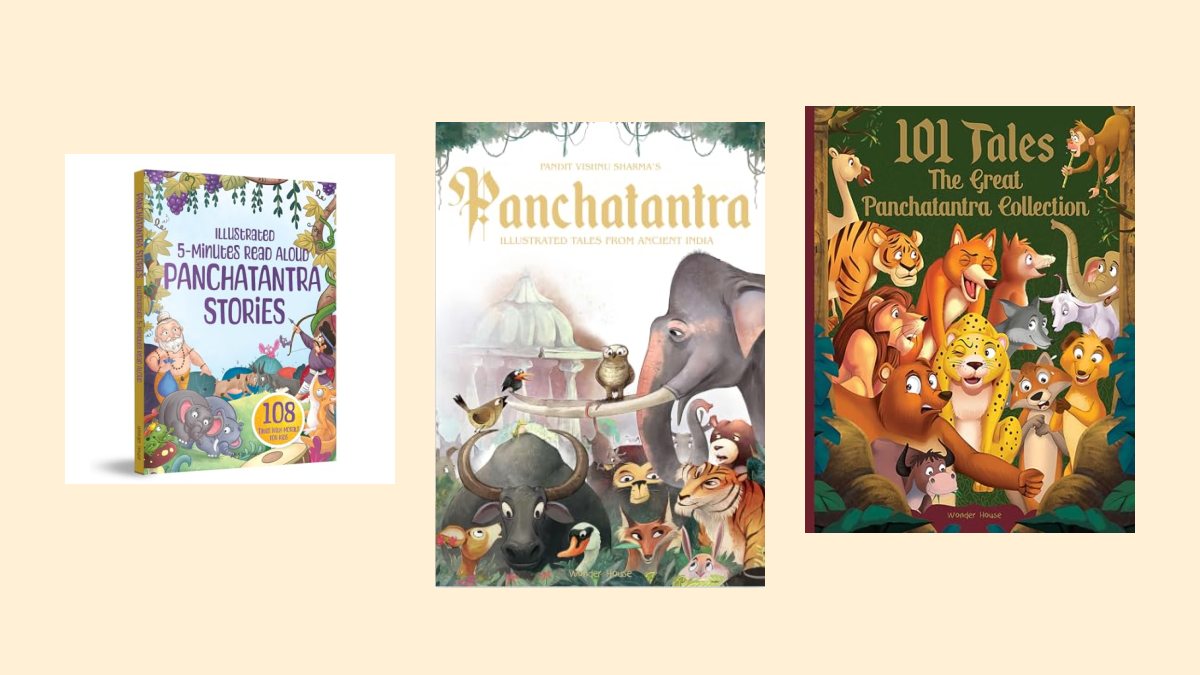
For reading aloud to younger children, look for large pictures and one short story per sitting. 108 Illustrated 5 Minutes Read Aloud Panchatantra Stories is built for exactly this. For a first book a child can hold and read, the slim volumes of Short Stories From Panchatantra Volume 1 and Volume 2 are a good size.
For a fuller retelling, Pandit Vishnu Sharma's Panchatantra presents the tales with rich illustrations, and 101 Tales: The Great Panchatantra Collection gives older children a large collection to read by themselves. If you prefer Hindi, try Panchatantra ki Laghu Kathayen.
More Indian story collections children love
Once your child enjoys the Panchatantra, there is a whole shelf of similar stories to explore:
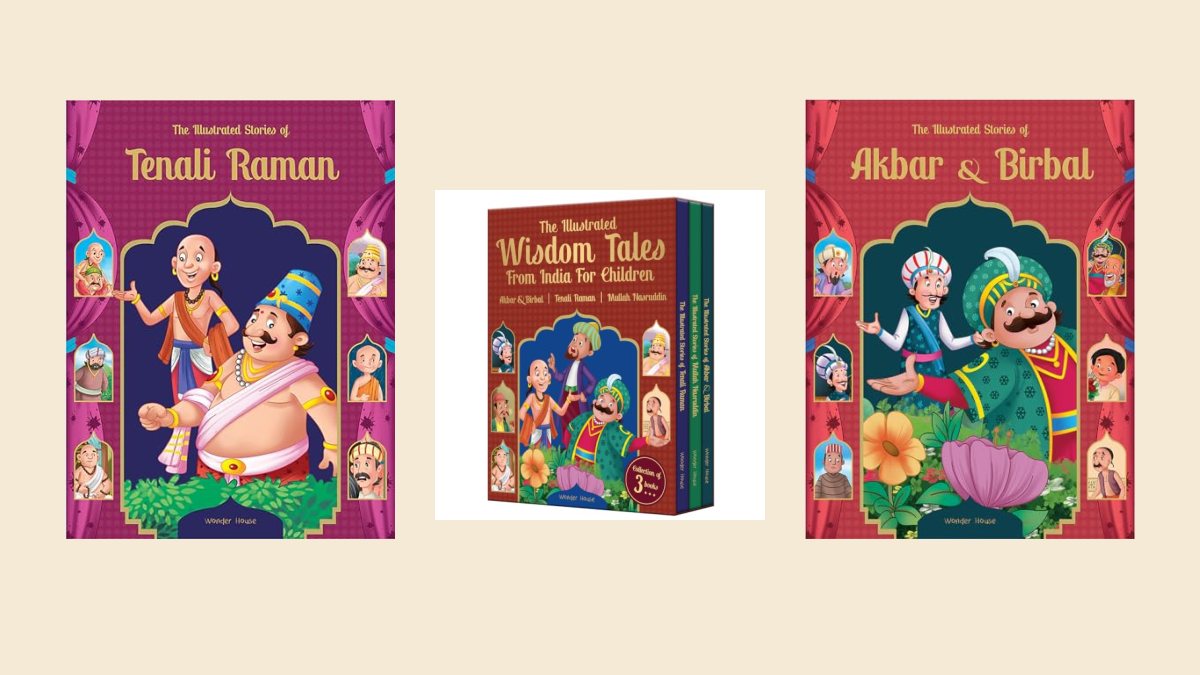
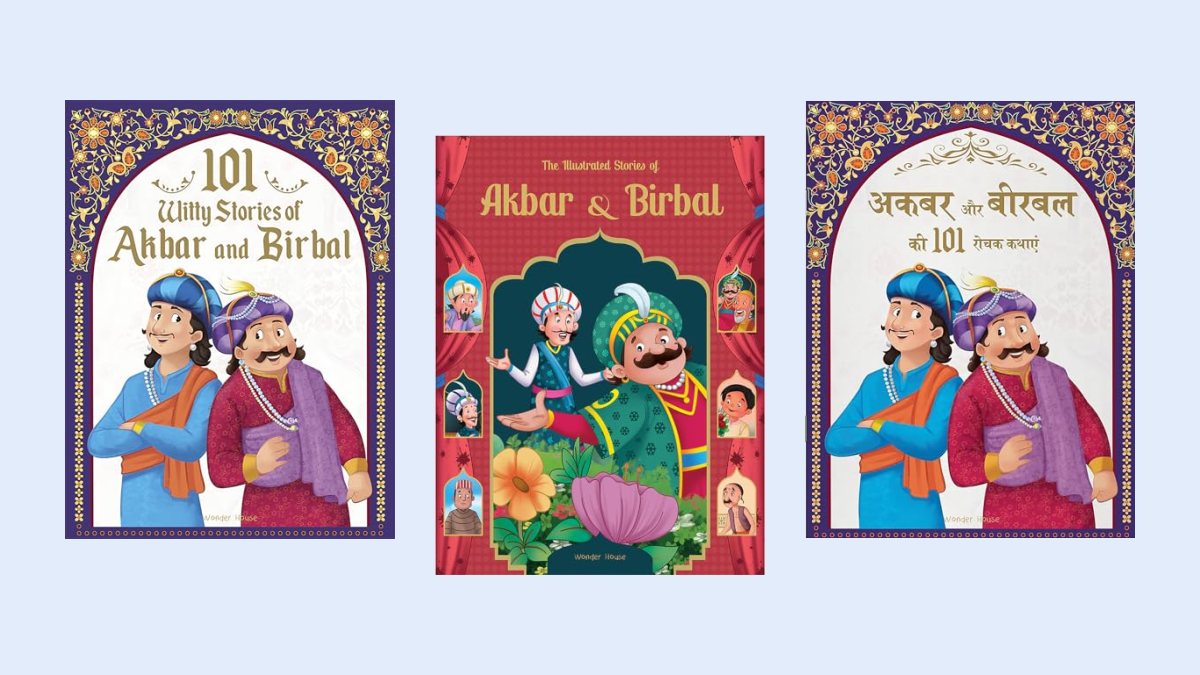
- The Illustrated Stories of Akbar and Birbal, for wit and quick thinking.
- The Illustrated Stories of Tenali Raman, for humour and clever answers.
- The Illustrated Jataka Tales, for stories of kindness and wisdom.
- 101 Aesop's Fables for Children, the Greek cousins of these tales.
- Illustrated Moral Stories, a collection of ten books for building a home library.
Common questions
Who wrote the Panchatantra? It is traditionally credited to Vishnu Sharma, who is said to have composed it to teach three young princes.
How many stories are in the Panchatantra? The count differs between versions, but there are roughly eighty to ninety stories arranged in five books.
What age is right for Panchatantra stories? You can start telling the simpler stories from about three years. Children of five to eight enjoy illustrated editions, and older children can read complete collections on their own.
Are the stories only about morals? No. They were written to teach practical wisdom: how to think ahead, judge people and act sensibly. That is why adults enjoy them too.
Start tonight
Pick one story from this page and tell it at bedtime tonight. For illustrated editions and more story collections, browse the Children Books section on Booksfactory.
0 Comments
Be the first to comment on this post.