
-
Fiction

- Romance
- Historical Fiction
- Crime & Mystery
- Modern Fiction (Post 1945)
- Religious & Spiritual
- Fiction-Related Item
- Fantasy
- Adventure
- Classic Fiction (Pre 1945)
- Fiction: Special Features
- Thriller / Suspense
- Science Fiction
- Philosophy
- Horror & Ghost Stories
- Graphic Novels
- Myth & Legend
- Sagas
- Poetry Anthology
- Erotic Fiction
- Society & Culture
- Film, TV & Radio
- Humour
-
Non-Fiction
Non-Fiction 13 categories · 2,996 booksView all
-
Teens & Ya
Teens & Ya 3 categories · 162 booksView all
-
Kids
- Picture Books
- Early Learning
- Fiction & True Story
- Picture & Activity Books
- General Non-Fiction
- Stationery & Misc
- Personal & Soc Issue
- Reference Material
- Fantasy
- Educational Material
- Modern Fiction (Post 1945)
- Horror
- Biography: General
- Graphic Novels
- Poetry Anthology
- Science Fiction
- Humour
- Myth & Legend
-
EXAMS
-
Shop by Age
-
Kids Books
-
Biography














-
Fiction
- Romance
- Historical Fiction
- Crime & Mystery
- Modern Fiction (Post 1945)
- Religious & Spiritual
- Fiction-Related Item
- Fantasy
- Adventure
- Classic Fiction (Pre 1945)
- Fiction: Special Features
- Thriller / Suspense
- Science Fiction
- Philosophy
- Horror & Ghost Stories
- Graphic Novels
- Myth & Legend
- Sagas
- Poetry Anthology
- Erotic Fiction
- Society & Culture
- Film, TV & Radio
- Humour
-
Non-Fiction
Non-Fiction 13 categories · 2,996 booksView all
-
Teens & Ya
Teens & Ya 3 categories · 162 booksView all
-
Kids
- Picture Books
- Early Learning
- Fiction & True Story
- Picture & Activity Books
- General Non-Fiction
- Stationery & Misc
- Personal & Soc Issue
- Reference Material
- Fantasy
- Educational Material
- Modern Fiction (Post 1945)
- Horror
- Biography: General
- Graphic Novels
- Poetry Anthology
- Science Fiction
- Humour
- Myth & Legend
-
EXAMS
-
Shop by Age
-
Kids Books
-
Biography

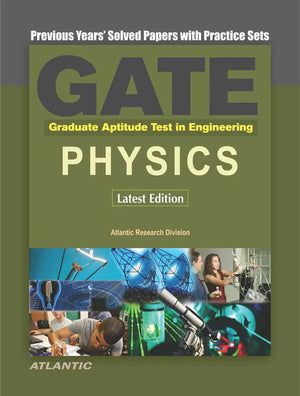

GATE Exam Books: Previous Year Papers, Practice Sets and General Aptitude
The Graduate Aptitude Test in Engineering is one of the most important exams for engineering and science graduates in India. A good GATE score can open the door to MTech and PhD programmes at the IITs, NITs and IISc, and many public sector companies use GATE scores for recruitment. This shelf holds GATE exam books built around previous year solved papers and practice sets, which are the most reliable way to understand what the exam really expects.
At present the shelf covers GATE Physics, GATE Mathematics, GATE Computer Science and Information Technology, and General Aptitude, with books from the Atlantic Research Division, K.R. Gupta and the Oswaal Editorial Board.
Books on This Shelf
- Gate Physics: Previous Year's Solved Papers with Practice Sets by the Atlantic Research Division, for physics graduates aiming at MSc, MTech or research programmes.
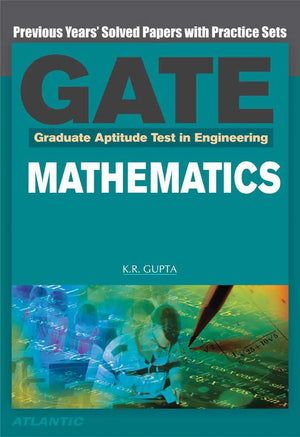
- GATE Mathematics: Previous Years' Solved Papers with Practice Sets by K.R. Gupta, for mathematics graduates.
- Gate Computer Science and Information Technology: Previous Years' Papers with Practice Sets by the Atlantic Research Division, for CS and IT students, which is one of the most competitive papers.
- Oswaal GATE 16 Years Chapterwise and Topicwise Solved Papers: General Aptitude, which matters to every candidate whatever their paper.
Why General Aptitude Matters
General Aptitude carries a fixed share of marks in every GATE paper. It tests verbal ability, numerical reasoning and basic analytical skills. Many candidates spend all their time on technical subjects and treat aptitude as an afterthought, yet these questions are often easier to score than core technical ones. Practising a few aptitude questions every day through the year adds up to an important advantage.
How to Use Previous Year Papers
Solved papers are the heart of GATE preparation. They show which topics appear often, how deep the questions go and how numerical answer type questions are framed.
- First pass: after finishing a subject, solve its chapterwise previous questions to test your understanding.
- Second pass: solve full papers from recent years under exam conditions, with a timer.
- Review: for every wrong answer, go back to the concept, not just the solution.
- Track topics: keep a list of topics that repeat and revise them more often.
GATE is a computer based test, so practise on screen as well, using a virtual calculator, since that is what you will have in the exam.
A Preparation Plan for Final Year Students
Many students prepare alongside their final year of college. That is possible if you plan well.
- Spend the first months on concepts, one subject at a time.
- Make short notes and formula sheets as you go.
- From the middle of the year, add weekly tests and previous papers.
- In the last two months, focus on full mock tests and revision.
Check the official GATE website for the organising institute, syllabus, paper codes and dates every year, since these change.
Subject Books to Read Alongside
A solved paper book shows what to practise, but you still need a clear textbook for concepts. For computer science, look at our computer science books for data structures, algorithms, operating systems and networks. Engineering students can browse engineering books. For physics and mathematics, see mathematics books, which include advanced titles such as complex analysis and differential equations that support GATE and CSIR NET preparation.
Engineering Mathematics
Engineering mathematics appears in most GATE papers and carries a solid share of marks. Linear algebra, calculus, differential equations, probability and statistics, and numerical methods are the usual topics. Many students neglect it because it feels like first year college work, but the questions are often direct and quick to solve once the concepts are clear. The GATE Mathematics book by K.R. Gupta is useful practice here even if mathematics is not your main paper. Spend a little time on it every week throughout your preparation.
Notes and Formula Sheets
GATE covers almost the whole of an undergraduate programme, so revision is a real challenge. The answer is short notes. As you study each subject, write a few pages of key definitions, formulas, standard results and common tricks. Keep them in one file. In the final weeks, these notes become your main revision material, and you will be grateful for every page you wrote earlier. Add the questions you got wrong in previous papers to the same notes, so that your weak spots stay in front of you.
Online Test Practice
Since GATE is computer based, it helps to get used to reading questions on a screen, using the on screen calculator and marking questions for review. Treat your mock tests as a rehearsal of exam day: same time of day, same duration and no breaks. Afterwards, spend at least as long reviewing the test as you spent taking it.
Balancing GATE With Placements
Final year students often face campus placements during GATE preparation. There is no single right answer, but it helps to decide early what you want most. If you aim for an MTech at a top institute or a PSU job, protect your study hours through placement season. If you take a job offer, you can still prepare for GATE in a later year, since many working professionals clear it with steady evening study.
Common Mistakes in GATE Preparation
- Studying without solving: GATE tests application, so passive reading is not enough.
- Ignoring negative marking: multiple choice questions carry a penalty, so guess carefully.
- Skipping aptitude and engineering mathematics: together they form a large share of marks.
- Leaving revision too late: the syllabus is long, and early topics fade without regular review.
- Too many sources: one good book per subject plus solved papers works better than ten half read books.
Life After GATE
A GATE score is valid for a few years, and it can be used for postgraduate admission, PSU recruitment, research fellowships and some jobs abroad. Think about your goal early. If you want research, read more widely in your subject. If you want a PSU job, track which companies recruit through GATE in your branch. For broader career planning, see career guidance books.
Where to Go Next
For other entrance and eligibility tests, including UGC NET, visit other competitive exam books. Pick your paper, gather a few good books, and give yourself a steady routine of study, practice and review. Consistency over months beats panic in the final weeks.
Make short formula notes as you study and revise them every week. Take full length mock tests in the last two months, and review each mistake carefully instead of just checking your score.