
-
Fiction

- Romance
- Historical Fiction
- Crime & Mystery
- Modern Fiction (Post 1945)
- Religious & Spiritual
- Fiction-Related Item
- Fantasy
- Adventure
- Classic Fiction (Pre 1945)
- Fiction: Special Features
- Thriller / Suspense
- Science Fiction
- Philosophy
- Horror & Ghost Stories
- Graphic Novels
- Myth & Legend
- Sagas
- Poetry Anthology
- Erotic Fiction
- Society & Culture
- Film, TV & Radio
- Humour
-
Non-Fiction
Non-Fiction 13 categories · 2,996 booksView all
-
Teens & Ya
Teens & Ya 3 categories · 162 booksView all
-
Kids
- Picture Books
- Early Learning
- Fiction & True Story
- Picture & Activity Books
- General Non-Fiction
- Stationery & Misc
- Personal & Soc Issue
- Reference Material
- Fantasy
- Educational Material
- Modern Fiction (Post 1945)
- Horror
- Biography: General
- Graphic Novels
- Poetry Anthology
- Science Fiction
- Humour
- Myth & Legend
-
EXAMS
-
Shop by Age
-
Kids Books
-
Biography








-
Fiction
- Romance
- Historical Fiction
- Crime & Mystery
- Modern Fiction (Post 1945)
- Religious & Spiritual
- Fiction-Related Item
- Fantasy
- Adventure
- Classic Fiction (Pre 1945)
- Fiction: Special Features
- Thriller / Suspense
- Science Fiction
- Philosophy
- Horror & Ghost Stories
- Graphic Novels
- Myth & Legend
- Sagas
- Poetry Anthology
- Erotic Fiction
- Society & Culture
- Film, TV & Radio
- Humour
-
Non-Fiction
Non-Fiction 13 categories · 2,996 booksView all
-
Teens & Ya
Teens & Ya 3 categories · 162 booksView all
-
Kids
- Picture Books
- Early Learning
- Fiction & True Story
- Picture & Activity Books
- General Non-Fiction
- Stationery & Misc
- Personal & Soc Issue
- Reference Material
- Fantasy
- Educational Material
- Modern Fiction (Post 1945)
- Horror
- Biography: General
- Graphic Novels
- Poetry Anthology
- Science Fiction
- Humour
- Myth & Legend
-
EXAMS
-
Shop by Age
-
Kids Books
-
Biography













Mathematics Books: From Basic Maths to Calculus, Statistics and Puzzles
Few subjects divide people as sharply as maths. Some adore it, while others have been frightened of it since Class 5. The right mathematics book can change that, because a clear explanation at the right level makes all the difference. This shelf offers textbooks for college students, reference books for competitive exams, statistics for researchers, workbooks for children and puzzles for pure fun.
You will find Indian authors widely used in colleges, including Hari Kishan, Daryab Singh, Ramji Lal and K. R. Gupta, as well as international names such as Serge Lang, Martin Gardner, Ian Stewart, Andy Field and B. S. Grewal.
Maths Books for College Students
BSc and MSc students usually need different books for each paper. Here is what to look for.
- Calculus: Hari Kishan has written on Integral Calculus and Differential Equations, along with vector algebra, which many students find approachable.
- Geometry: Coordinate Geometry of Three Dimensions, also by Hari Kishan, is a good resource for this topic.
- Algebra and analysis: Serge Lang is a classic name for serious students, and Complex Analysis: An Introduction by Mohammad Ibrahim is a useful entry point.
- Numerical methods: Arieh Iserles is a respected author here for advanced learners.
- Engineering maths: Higher Engineering Mathematics by B. S. Grewal is one of the most used books in Indian engineering colleges.
A good approach is to read the theory once, close the book, and then try to rebuild each proof by yourself. You will quickly find which steps you only thought you understood. Maths truly is learned with a pen in your hand.
Statistics Books
Statistics books have become much more popular because data matters in almost every field now. Students of psychology, economics, medicine and management all need statistics at some stage.
- Practical work: Practical Statistics by Daryab Singh is a common choice for students, available in volumes.
- Research and SPSS: Discovering Statistics Using IBM SPSS Statistics by Andy Field is famous for making a dry subject friendly and even funny.
- Reference: 100 Statistical Tests by Gopal K. Kanji is a handy book to keep on your desk when you are writing a thesis.
- Social sciences: Statistics for Behavioural and Social Sciences by Santa Misra is written with these students in mind.
- Clear basics: David S. Moore is well known for his clear explanations of what statistics means in the real world.
- Theory: Fundamentals of Testing Statistical Hypotheses by A. Santhakumaran is for those going deeper into the subject.
Do not just memorise formulas. Ask what question a test answers, and what assumption it makes. This understanding will protect you from drawing wrong conclusions from data, which is a far more common error than a wrong calculation.
Business Mathematics
Commerce and management students have their own requirements. Several books on this shelf are titled simply Business Mathematics, including those by D. C. Sancheti and Ruchi Sharma, and Rangaraj G. They cover interest, annuities, matrices and basic calculus with commercial examples. Choose the one which matches your university syllabus most closely, and pay special attention to word problems, as these are often where marks are lost.
Maths for Competitive Exams
Quantitative aptitude appears in CAT, bank exams, SSC and many other tests. Cat Cracker: Quantitative Aptitude by K. R. Gupta targets management entrance preparation, and Problems in Mathematics: With Hints and Solutions by V. Govorov is excellent for building strong problem solving skills. Elementary Mathematics: Selected Topics and Problem Solving by Dorofeev is another book that serious learners value. For speed, learn tables, squares and common fractions by heart, and work through timed sets. For specific exams, also see our SSC exam books and other competitive exam books, and always check the official syllabus.
Maths for School Children
Children do best when maths feels like a game. The shelf includes Kumon workbooks such as Geometry and Measurement for Grade 1, which build skills in small steps. Math Mammoth offers grade based tests and reviews, and Advantage Maths is another series for school learners. For younger children, our own Maths Made Fun books are designed for early practice. Parents can read our guide on how to teach numbers to kids at home.
The most important thing a parent can do is to avoid saying that they were always bad at maths. Children pick up that fear easily. Use real life: count stairs, share snacks fairly and let your child work out small sums while you shop.
Maths Puzzles and Popular Maths
Maths is not only for exams. If you enjoy thinking for its own sake, this part of the shelf is a delight.
- Martin Gardner: My Best Mathematical and Logic Puzzles comes from a writer who introduced generations of readers to recreational maths.
- Ian Stewart: Professor Stewart's Hoard of Mathematical Treasures is packed with curious ideas and short pieces.
- Sudoku: Jigsaw Sudoku Compendium and number fill-in collections will keep your brain busy on a long journey.
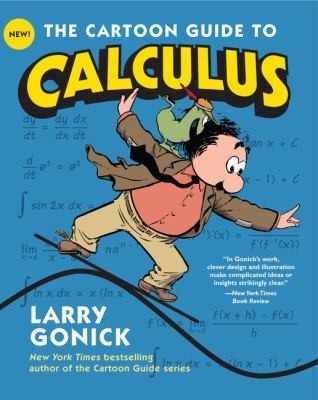
- Comics: The Cartoon Introduction to Calculus by Grady Klein shows that even calculus can be made approachable with humour.
- Origami: Paper Square Geometry shows how folding a sheet of paper can teach geometry.
Why Students Get Stuck
Most trouble with maths comes from gaps in earlier basics, not from a lack of talent. If algebra feels hard, the real problem may be fractions. If calculus feels impossible, it might be functions. Be honest about where the gap begins, go back, and fix it. There is no shame in using an easier book first. Short daily practice is far better than one long session, because the mind needs time to absorb new ideas.
Mathematics and Computer Science
Mathematics is the foundation of computing, data science and AI. Michael Sipser's Introduction to the Theory of Computation is a well regarded book on this shelf for those who want to understand what computers can and cannot do. Graph theory, discrete maths, probability and linear algebra are especially valuable for anybody heading towards software or machine learning.
Where to Go Next
Maths feeds directly into physics, engineering books and computer science. To use statistics in practice, see research methods, and for number loving children, try Little Genius Brain Booster. Choose a book that feels just slightly hard, solve the problems yourself and enjoy the small thrill when a difficult idea finally clicks.