
-
Fiction

- Romance
- Historical Fiction
- Crime & Mystery
- Modern Fiction (Post 1945)
- Religious & Spiritual
- Fiction-Related Item
- Fantasy
- Adventure
- Classic Fiction (Pre 1945)
- Fiction: Special Features
- Thriller / Suspense
- Science Fiction
- Philosophy
- Horror & Ghost Stories
- Graphic Novels
- Myth & Legend
- Sagas
- Poetry Anthology
- Erotic Fiction
- Society & Culture
- Film, TV & Radio
- Humour
-
Non-Fiction
Non-Fiction 13 categories · 2,996 booksView all
-
Teens & Ya
Teens & Ya 3 categories · 162 booksView all
-
Kids
- Picture Books
- Early Learning
- Fiction & True Story
- Picture & Activity Books
- General Non-Fiction
- Stationery & Misc
- Personal & Soc Issue
- Reference Material
- Fantasy
- Educational Material
- Modern Fiction (Post 1945)
- Horror
- Biography: General
- Graphic Novels
- Poetry Anthology
- Science Fiction
- Humour
- Myth & Legend
-
EXAMS
-
Shop by Age
-
Kids Books
-
Biography






-
Fiction
- Romance
- Historical Fiction
- Crime & Mystery
- Modern Fiction (Post 1945)
- Religious & Spiritual
- Fiction-Related Item
- Fantasy
- Adventure
- Classic Fiction (Pre 1945)
- Fiction: Special Features
- Thriller / Suspense
- Science Fiction
- Philosophy
- Horror & Ghost Stories
- Graphic Novels
- Myth & Legend
- Sagas
- Poetry Anthology
- Erotic Fiction
- Society & Culture
- Film, TV & Radio
- Humour
-
Non-Fiction
Non-Fiction 13 categories · 2,996 booksView all
-
Teens & Ya
Teens & Ya 3 categories · 162 booksView all
-
Kids
- Picture Books
- Early Learning
- Fiction & True Story
- Picture & Activity Books
- General Non-Fiction
- Stationery & Misc
- Personal & Soc Issue
- Reference Material
- Fantasy
- Educational Material
- Modern Fiction (Post 1945)
- Horror
- Biography: General
- Graphic Novels
- Poetry Anthology
- Science Fiction
- Humour
- Myth & Legend
-
EXAMS
-
Shop by Age
-
Kids Books
-
Biography





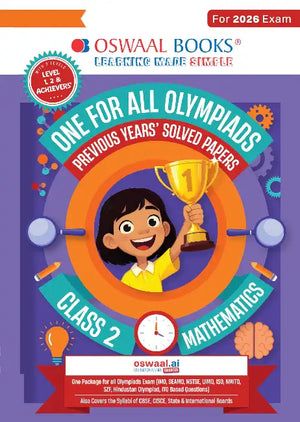


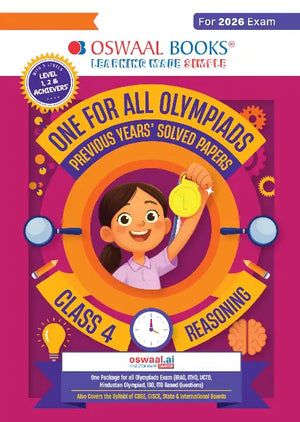
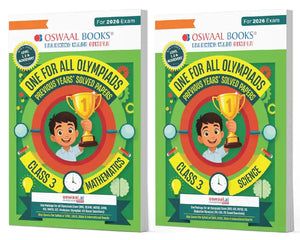


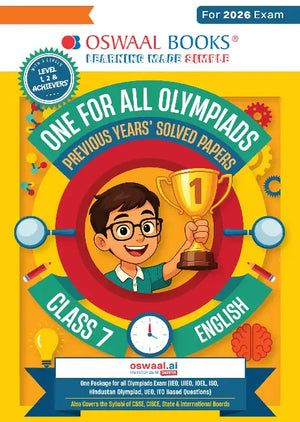


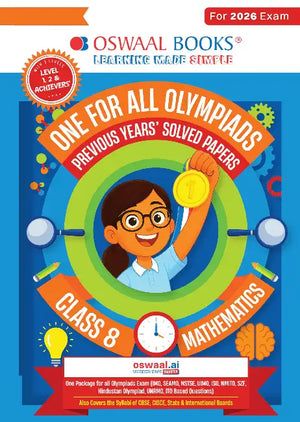


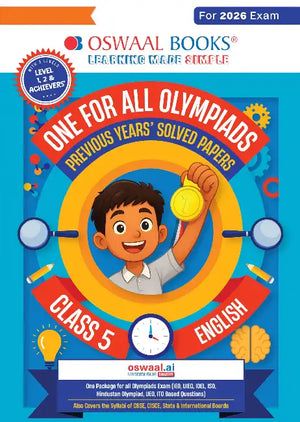

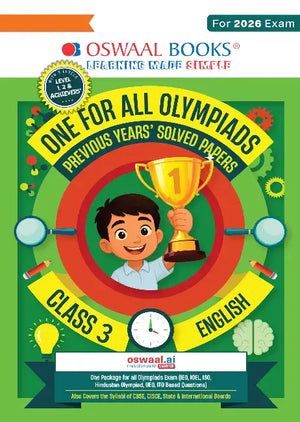

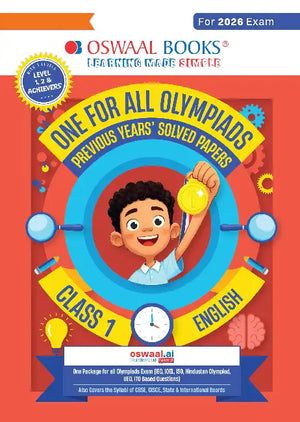

Olympiad Books for Class 1 to 8: IMO, NSO, IEO, ICSO and Maths Olympiad Problems
Olympiads give school students a chance to stretch beyond the textbook, test themselves against children from across the country and discover what they truly enjoy. This shelf holds Olympiad books for classes 1 to 8, covering the SOF exams such as IMO, NSO, IEO and ICSO, the Silverzone and Crest reasoning tests and general knowledge Olympiads. It also carries serious problem books for older students who want to aim for national and international mathematics competitions.
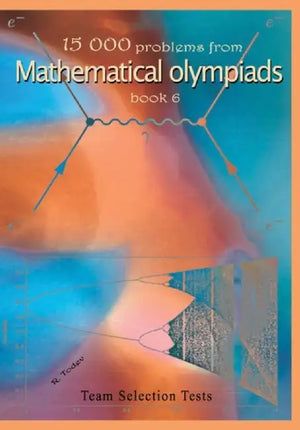
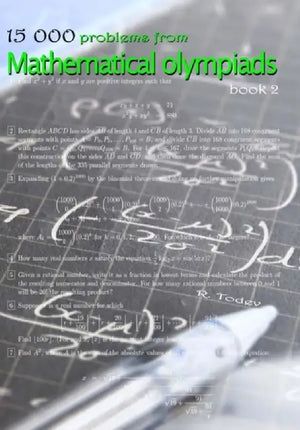
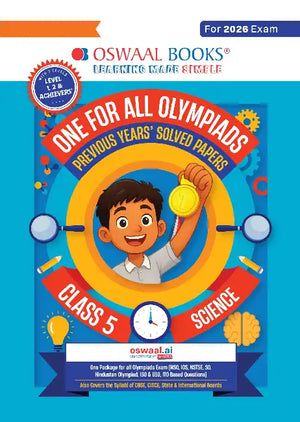
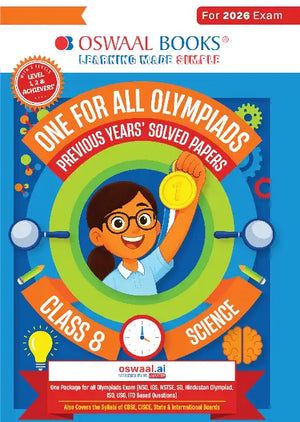
The main range is the Oswaal One For All Olympiads series, with chapterwise previous years solved papers for Maths, Science, English, Cyber, General Knowledge and Logical Reasoning. For advanced problem solvers there are classic collections such as 15000 Problems from Mathematical Olympiads by R. Todev and Inequalities: A Mathematical Olympiad Approach.
Which Olympiad Should Your Child Take?
Each Olympiad tests a different strength, so it helps to start with your child's interests.
- Maths Olympiad (IMO): for children who enjoy numbers, patterns and puzzles. The Oswaal Maths prep guides run from class 1 to class 8.
- Science Olympiad (NSO): for curious children who ask why things happen. Science prep guides are available for classes 2 to 8.
- English Olympiad (IEO): builds grammar, vocabulary and reading skills, with books for classes 1 to 7.
- Cyber Olympiad (ICSO): tests computer knowledge and logical thinking, with books for younger classes.
- GK Olympiad: for children who love facts about the world, with books from class 1 to 6.
- Logical Reasoning: useful for Silverzone and Crest exams and for any child who likes brain teasers.
There is no need to enter every Olympiad. One or two exams prepared well will do more for a child's confidence than five attempted in a hurry.
Sets for Younger Classes
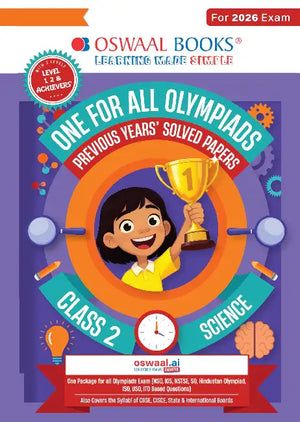
For classes 1, 2 and 3, combined sets are a convenient choice. The Oswaal One for All Olympiads set for class 1 brings Maths, Science and GK together, and the class 2 set covers Maths, Science, English and GK. A class 3 set of Maths and Science is also available. Each book includes level 1, level 2 and achievers section questions, so a child can move from easy to challenging at their own pace.
How to Prepare Without Pressure
Olympiad preparation works best when it feels like play, especially in the early classes.
- Short sessions: twenty to thirty minutes a few times a week is enough for younger children.
- Talk through answers: ask your child to explain how they got an answer, not just whether it is right.
- Use previous papers: they show the style of questions, which often differs from school tests.
- Celebrate effort: praise the thinking, not only the score, so that the child keeps enjoying the challenge.
- Leave room for school work: the Olympiad should add to learning, not replace it.
Advanced Mathematical Olympiad Books
Older students who have outgrown school level contests can move on to real competition mathematics. These books are demanding, and they reward patience.
- 15000 Problems from Mathematical Olympiads by R. Todev: several volumes on the shelf, including Team Selection Tests, Mathematical Competitions for University Students and the International Mathematics Tournament of the Towns.
- Grade Five Competition from the Leningrad Mathematical Olympiad by Kseniya Garaschuk: lovely problems that need clever thinking rather than heavy formulas.
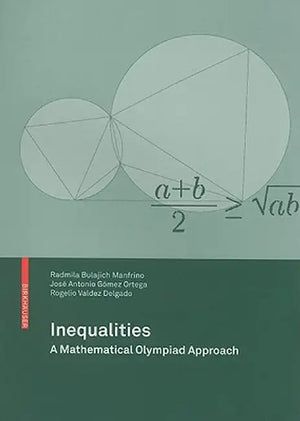
- Inequalities: A Mathematical Olympiad Approach by Radmila Bulajich Manfrino: a focused study of one of the core Olympiad topics.
- Lecture Notes on Mathematical Olympiad by Jiagu Xu: structured notes for serious self study.
Students aiming at the Indian national Olympiad route should work through problems slowly, write full solutions and discuss them with a teacher or friend. A single problem solved properly over an hour teaches more than ten answers copied from the back.
Benefits Beyond the Medal
Children who take part in Olympiads tend to read questions carefully, manage time better and stay calm in exams. They also learn that a hard question is a puzzle to work on, not a reason to panic. These habits help later in board exams and in entrance tests such as JEE and NEET. Many children also gain confidence simply from attempting a paper alongside students from other schools.
Tips for Parents
- Register through your school where possible, and check exam dates on the official organiser websites.
- Keep a simple timetable on the fridge so practice becomes routine.
- Read the solutions together for questions your child found tricky.
- Do not compare your child with others. Each child grows at their own speed.
A Sample Weekly Routine
Here is a simple routine that works for many families in the months before an Olympiad. On Monday and Wednesday, spend twenty minutes on one chapter from the prep guide. On Friday, try the previous year questions for that chapter. On the weekend, do a short mixed quiz and talk about the questions your child found tricky. In the last month, replace the chapter work with full sample papers, timed like the real exam. Keep at least one day a week completely free, so that the child stays fresh and keeps looking forward to practice.
Understanding the Levels
Many Olympiads run in two levels. Level 1 is held in schools and is open to all students. Children who score well move on to level 2, which is tougher and has fewer candidates. The Oswaal prep guides include achievers section questions, which are the higher order thinking questions that often separate the top scorers. Do not rush a young child into these. Let them master the regular questions first, then introduce one or two achievers questions a week as a fun challenge.
Olympiads and Board Syllabus
The Olympiad syllabus usually follows the school curriculum for each class, with extra questions on reasoning and application. That means good Olympiad practice also strengthens school learning. A child who has worked through the class 5 Science guide, for example, will often find school science tests easier. The reverse is also true: regular school study is the base on which Olympiad skills are built, so never let Olympiad books push the textbook aside.
Where to Go Next
For more maths beyond Olympiads, visit mathematics books, and for science reading, physics books. Younger children who love learning can explore early learning books and non-fiction books for kids. For school board practice, see CBSE, ICSE and other exam books. Pick the right Olympiad, keep practice light and regular, and let curiosity lead the way.
Do not worry about marks in the first attempt; the real gain is a stronger way of thinking about problems.