













Blog Article
Most of us were never taught about money at school. We learnt algebra and history, but nobody explained how to save, how to budget, what a mutual fund is or why a credit card bill can quietly ruin a salary. So most people learn about money the hard way, through mistakes.
There is an easier way. A handful of good personal finance books can teach you in a few weeks what many people only learn after ten years of trial and error. This guide lists the best books on money for Indian readers, from the global bestsellers everyone is talking about to new Indian books written for Indian salaries, Indian taxes and Indian families. There is also a simple reading order at the end, and a section of money books in Hindi.
A quick note: this is a reading list, not financial advice. Every family's situation is different, so read, learn and then decide for yourself.
Why read personal finance books at all?
- They change how you think about money: most money problems are not maths problems. They are habit and behaviour problems, and books are very good at fixing those.
- They protect you from bad advice: once you understand the basics, it becomes easy to spot a bad policy, a risky scheme or a "guaranteed return" that is too good to be true.
- They help at every age: a student, a first-jobber, a newly married couple and a parent planning for retirement all get something different from the same book.
- They are the cheapest course you will ever take: one good decision, like starting an SIP early or avoiding one bad loan, pays for a lifetime of books.
Part 1: The global bestsellers everyone should read
These are the most famous finance books for beginners in the world. They are short, easy and still sell lakhs of copies every year.
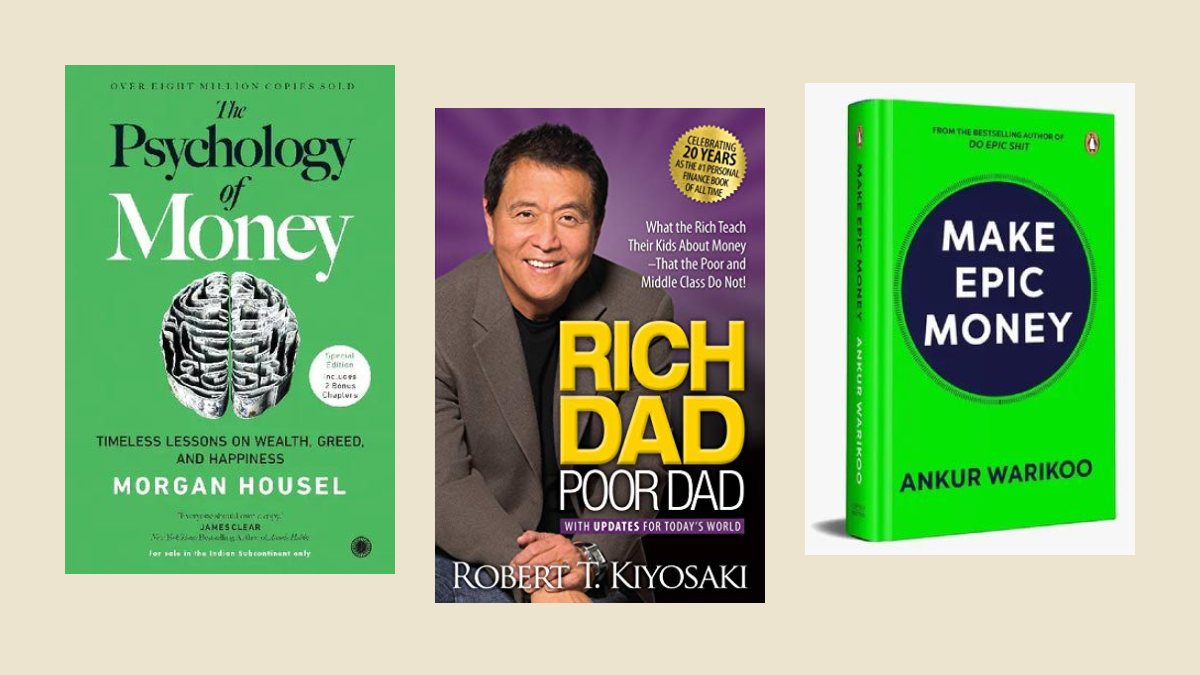
1. The Psychology of Money by Morgan Housel
The Psychology of Money is probably the most recommended money book of the last five years, and for good reason. Morgan Housel's big idea is simple: doing well with money has less to do with how smart you are and more to do with how you behave. The book is made of short chapters, each built around one true story, about luck and risk, about "enough", about why saving matters more than income and why time is the most powerful force in investing. If you only read one book on this list, read this one.
2. Rich Dad Poor Dad by Robert Kiyosaki
Rich Dad Poor Dad is the book that got millions of people interested in money for the first time. Kiyosaki compares the advice of his own father, a well educated but always struggling employee, with that of his friend's father, a businessman who built real wealth. The key lessons are easy to remember: the rich buy assets, the middle class buys liabilities it thinks are assets, and financial education matters more than a big salary. Read it for the mindset. It is a great starting point for a teenager or a college student.
3. The Richest Man in Babylon by George S. Clason
Written almost a hundred years ago, The Richest Man in Babylon teaches money through simple stories set in ancient Babylon. Its first rule is still the best piece of personal finance advice ever given: keep at least one tenth of everything you earn. The book also covers controlling spending, making money grow, protecting it from loss and owning your home. It is short, easy and perfect for a young reader who finds finance boring.
4. Think and Grow Rich by Napoleon Hill
Think and Grow Rich is more about success than about saving, but it belongs on every list of books on money. Napoleon Hill studied hundreds of successful people and wrote down the habits they shared: a clear goal, a burning desire, a plan, persistence and the right people around you. Many business owners in India say this was the first book that made them think bigger.
5. The Millionaire Next Door by Thomas J. Stanley and William D. Danko
The Millionaire Next Door is based on real research into how wealthy families actually live, and the answer surprises most readers. Many of them drive old cars, live in ordinary houses and spend far less than they earn. The people who look rich, on the other hand, are often deep in debt. The lesson is a powerful one for anyone tempted by EMIs: wealth is what you do not spend.
6. Secrets of the Millionaire Mind by T. Harv Eker
Secrets of the Millionaire Mind looks at the "money blueprint" that each of us picks up from our parents and childhood, and how it quietly controls our spending and saving as adults. It is a motivational read with practical exercises, and it pairs well with Rich Dad Poor Dad.
Part 2: The best personal finance books for India
Global books teach the mindset, but Indian readers also need books that talk about PPF, SIPs, term insurance, home loans and Indian taxes. These are the Indian money management books worth reading.
7. Make Epic Money by Ankur Warikoo
Ankur Warikoo is one of India's most followed creators, and Make Epic Money is his money book for young Indians. It covers the basics in his simple, direct style: spending, saving, emergency funds, insurance, investing and the money mistakes young people make in their first jobs. A very good first book for anyone in their twenties.
8. Let's Talk Mutual Funds by Monika Halan
Monika Halan is one of India's most trusted personal finance writers. Let's Talk Mutual Funds explains mutual funds from zero: what they are, how SIPs work, how to choose a fund, how much risk to take and what to avoid. If you have been meaning to start investing in mutual funds but never knew where to begin, this is the book.
9. Money Myths and Mantras by Devina Mehra
Devina Mehra is a well known Indian market expert, and Money Myths and Mantras busts many of the money beliefs Indian families have held for generations, about gold, property, "safe" investments and more. It is a practical, no-nonsense book for readers who already save but want to invest better.
10. Rise to the 1% by Sharan Hegde
Rise to the 1% is a playbook for building wealth and retiring early, written for Indian readers by a popular finance creator. It is aimed at young earners who want a clear plan: how to grow income, how to invest and how to think about financial freedom.
11. The Money Ball by Sarthak Ahuja
The Money Ball is a new Indian money book from a chartered accountant and finance creator who is known for explaining business and money in simple language. A good pick for readers who like short, practical lessons with Indian examples.
12. Coffee Can Investing by Saurabh Mukherjea
Once your basics are in place, Coffee Can Investing shows how patient, long-term investing in high quality Indian companies has built wealth over the years. It is a natural bridge from personal finance to the stock market. For more books on that next step, see our list of the best stock market books for beginners.
Part 3: Practical handbooks
13. Personal Finance For Dummies by Eric Tyson
Personal Finance For Dummies is a complete reference book. It covers budgeting, debt, saving, investing, insurance and planning for big goals in the famous easy For Dummies style. Some examples are American, but the principles work everywhere, and it is a good book to keep on the shelf and dip into when you need it.
14. Money Hacks by Lisa Rowan
Money Hacks is a collection of more than 300 small, practical ideas to spend less and save more. It is not a book you read in one sitting. Pick a few hacks a week and try them. Small changes add up faster than most people expect.
Money books in Hindi
Many of the best personal finance books are also available in Hindi, which makes them perfect gifts for parents and for readers who are more comfortable in Hindi.
- Babylon Ka Sabse Ameer Aadami: the Hindi edition of The Richest Man in Babylon.
- Think and Grow Rich (Hindi): Napoleon Hill's classic in Hindi.
- S.I.P. Ke Chamatkar Se Financial Freedom Kaise Payen? by Mahesh Chandra Kaushik: a simple Hindi guide to SIPs and long-term investing.
- Mutual Fund Mein Investment Dwara Munafa Kaise Kamayen by Dr. Yogesh Sharma: mutual funds explained in Hindi.
Which personal finance book should you read first?
Here is a simple reading order that works for most beginners:
- Step 1, the mindset: The Psychology of Money, then Rich Dad Poor Dad.
- Step 2, the habits: The Richest Man in Babylon and The Millionaire Next Door.
- Step 3, the Indian basics: Make Epic Money, then Let's Talk Mutual Funds.
- Step 4, going deeper: Money Myths and Mantras, Rise to the 1% and Coffee Can Investing.
Read one book a month and in less than a year you will understand money better than most people around you.
Five money lessons that appear in almost every book
- Pay yourself first: save a fixed part of your income the day it arrives, not what is left at the end of the month.
- Build an emergency fund: keep a few months of expenses aside before you start investing.
- Avoid costly debt: credit card dues and personal loans for wants, not needs, are the fastest way to fall behind.
- Start early: time does most of the work in investing. A small SIP started at 25 can beat a big one started at 40.
- Keep it simple: you do not need complex products. Most families do well with insurance, an emergency fund and steady long-term investing.
Frequently asked questions
What is the best personal finance book for beginners?
The Psychology of Money by Morgan Housel is the most common answer, because it is easy to read and changes how you think about money. For Indian specifics, add Make Epic Money and Let's Talk Mutual Funds.
Is Rich Dad Poor Dad still worth reading?
Yes, as a mindset book. It is great at making readers think about assets, liabilities and financial education. Pair it with an Indian book for practical steps.
Which money books are good for students?
Rich Dad Poor Dad, The Richest Man in Babylon and The Psychology of Money are short, easy and perfect for students. Starting young is the biggest advantage anyone can have.
Find more books on money and business
You can browse our full range of economics, finance and business books and our self-help books on BooksFactory. And if money is only one part of your goal, our list of the best business books for entrepreneurs is the perfect next read.




0 Comments
Be the first to comment on this post.