
-
Fiction

-
Non-Fiction
Non-Fiction 13 categories · 3,022 booksView all
-
Teens & Ya
Teens & Ya 3 categories · 162 booksView all
-
Kids
-
EXAMS
-
Shop by Age
-
Kids Books
-
Biography







-
Fiction
-
Non-Fiction
Non-Fiction 13 categories · 3,022 booksView all
-
Teens & Ya
Teens & Ya 3 categories · 162 booksView all
-
Kids
-
EXAMS
-
Shop by Age
-
Kids Books
-
Biography











Research Methodology Books for Students, Scholars and Writers
Every thesis, dissertation and project report begins with the same question: how do I find out something reliable and then explain it clearly? Research methodology books answer both halves of that question. This shelf brings together guides on designing a study, collecting and analysing data, and writing up the results, along with handbooks on academic writing, citation styles and getting published. It serves BA, MA, MBA, MPhil and PhD students, teachers, NGO workers and anyone who has to turn evidence into a report.
You will find well known names such as Gary Thomas, whose Doing Research is a friendly first guide, Peter Stokes and Tony Wall on Research Methods, Bora Pajo with Introduction to Research Methods: A Hands-On Approach, and K.R. Sharma, whose Research Methods volumes are used widely in Indian universities. Diana Hacker, Robert Perrin and Cheryl Glenn cover the writing side.
Start With the Research Question
Most weak projects fail before any data is collected, because the question is too wide or too vague. A good research methodology book will teach you to narrow a topic down to something you can actually answer in the time you have. Doing Research by Gary Thomas is especially good on this stage, and it is written in plain language for first time researchers.
- Make the question specific. Who, where, when and what exactly are you studying?
- Check that data exists. A brilliant question is useless if you cannot get the information.
- Read before you design. A short literature review shows what is already known and where the gaps are.
- Talk to your guide early. A ten minute conversation can save you weeks of work in the wrong direction.
Qualitative and Quantitative Research
Students are often told to choose between qualitative and quantitative methods, as if one were better than the other. In truth they answer different kinds of questions. Numbers tell you how much and how often. Interviews, observation and case studies tell you how and why.
Research Methods in Practice: Strategies for Description and Causation by Dahlia K. Remler is strong on the quantitative side, including how to think about cause and effect. Scale Development: Theory and Applications by Robert F. DeVellis is a standard text for anyone building a questionnaire. For advanced statistics, Mastering Partial Least Squares Structural Equation Modeling with SmartPLS by Ken Kwong Wong is a practical, step by step guide that many management and social science scholars use for their thesis analysis.
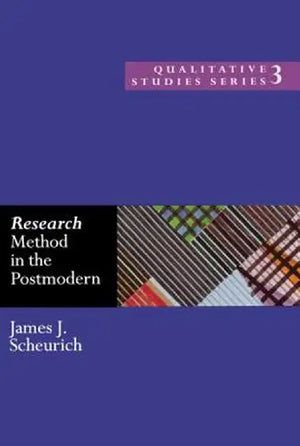
On the qualitative side, The Creative Qualitative Researcher by Pelias shows how to write findings that people actually want to read, and Research Method in the Postmodern by James Scheurich raises deeper questions about how knowledge is made. Research Methods in Conflict Settings by Dyan Mazurana, Karen Jacobsen and Lacey Gale deals with fieldwork in difficult places, and Research as Accompaniment by Martin Renzo Rosales looks at community partnerships.
Research Methods for Specific Fields
Some books on this shelf are written for one discipline, which makes them easier to apply.
- Language teaching: Research Methods for Language Teaching by Netta Avineri.
- Workplace research: Doing Work Based Research by Carol Costley, for professionals studying their own organisations.
- Evaluation: Utilization-Focused Evaluation by Patton, a key text for anyone assessing programmes and projects.
- Reading research: How to Read, Evaluate, and Use Research by Sharon L. Nichols helps teachers and managers judge whether a study is any good.
For wider background in the social sciences, our sociology and anthropology and psychology books shelves are useful companions.
Academic Writing and Citation Style Guides
Good research can still lose marks if it is badly written or poorly referenced. Writing Research Papers: A Complete Guide by James Lester walks you from topic to final draft. Pocket Guide to APA Style by Robert Perrin and A Pocket Style Manual by Diana Hacker are compact references you can keep on your desk while writing. Rules for Writers and The Bedford Handbook, also by Hacker, go deeper into grammar, structure and argument.
Writing Empirical Research Reports by Melisa C. Galvan explains exactly what goes into each section of a report. Writing for Science Students by Jennifer Boyle and Effective Writing for Engineers, Managers, Scientists by H. J. Tichy help technical students write clearly. How to Write Better Essays by Bryan Greetham is a favourite with undergraduates.
A few simple habits make a big difference:
- Keep a reference list from day one, not on the night before submission.
- Write the method section while you are doing the work, when the details are fresh.
- Read your draft aloud. Clumsy sentences become obvious immediately.
- Follow one citation style consistently throughout.
Publishing Your Research and Winning Grants
Once the thesis is done, many scholars want to publish. Publishing Journal Articles by Zheng Yan explains how journals work and how to respond to reviewers. The Hand of Science: Academic Writing and Its Rewards by Blaise Cronin looks at why academics write the way they do. The Success in Research Kit by Denicolo supports doctoral students through the whole journey.
If you need funding, Winning Grants Step by Step by Tori O'Neal-McElrath is a complete workbook for planning and writing proposals. Self-Publishing for Dummies by Jason R. Rich is helpful for those who want to bring their work to a general audience without a traditional publisher.
Common Mistakes in Research Projects
- Collecting data before fixing the question. You end up with information that does not answer anything.
- Copying a method without understanding it. Your guide and examiner will ask why you chose it.
- Ignoring ethics. Consent, privacy and honesty matter in every study involving people.
- Overclaiming. A small sample cannot prove a large general truth.
- Leaving writing until the end. Writing is part of thinking, so start early.
Choosing the Right Research Methodology Book
If you are completely new, begin with one friendly introduction, such as Gary Thomas or Bora Pajo. Add K.R. Sharma if your university follows an Indian syllabus. Then pick one style guide for the referencing system your department uses. Specialised books on statistics, scale development or evaluation can wait until you know which method your project needs.
Where to Go Next
Research skills connect with almost every subject. For library and information work, see library and information science books. For dictionaries, atlases and general reference, browse encyclopaedias and reference books. If your research is in business, our business management shelf has plenty of case material. A clear question, an honest method and patient writing will carry you a long way, whatever your field.
Keep your references organised from day one and learn the citation style your university expects. This saves weeks of painful work at the end.