

Blog Article
Every Indian child knows the friendly god with the elephant head, the big belly and the tiny mouse who carries him everywhere. Before any puja, any new beginning and every Diwali, families pray to Ganesha first. Yet many children know his face far better than his stories. Ganesha stories for kids are some of the funniest and wisest tales in all of Indian mythology, full of sweets, races, curses and clever thinking.
In this guide we have retold seven famous stories of Ganesha, each one short enough to read aloud in a few minutes. Every story ends with a lesson and a question to talk about with your child. At the end you will find the best Ganesha story books for children of every age, in English and Hindi.
Who is Lord Ganesha?
Ganesha, also called Ganpati, Vinayaka and Vighnaharta, is the son of Lord Shiva and Goddess Parvati. He is the remover of obstacles and the god of wisdom, learning and new beginnings. That is why his name is spoken first at weddings, house warmings, the first day of school and the opening of a new shop.
Children love Ganesha because he feels like a friend. He loves modaks and laddoos, he rides a mouse called Mooshak, and in many of his stories he wins not by strength but by being clever. On Diwali night, families across India worship Lakshmi and Ganesha together, praying for wealth and wisdom side by side. Ganesh Chaturthi, his own festival, is celebrated with huge joy in Maharashtra and across the country. Either festival is a perfect time to share these Lord Ganesha stories with your child.
7 famous Ganesha stories for kids
Read these Ganesh stories slowly and with feeling. Give Ganesha a cheerful voice, make Mooshak squeak, and stop at the exciting moments so your child can guess what happens next.
1. How Ganesha Got His Elephant Head
One day, while Lord Shiva was away on Mount Kailash, Goddess Parvati wanted to take her bath in peace. She took some turmeric paste, shaped it into a little boy and breathed life into him. "You are my son," she said. "Guard the door and do not let anyone in." The boy bowed and stood at the door with a stick in his hand.
Soon Shiva came home. The boy did not know him and blocked his way. "My mother said no one may enter," he said firmly. Shiva was surprised, then angry. When the boy refused again and again, Shiva's temper flared and in his fury he struck off the boy's head.
When Parvati came out and saw what had happened, her grief and anger shook the three worlds. Shiva understood his mistake at once. He sent his followers to bring back the head of the first creature they found sleeping with its head facing north. They returned with the head of a young elephant. Shiva placed it on the boy and brought him back to life. Then he blessed him: "From today you will be the leader of my followers, the Ganas. You will be called Ganesha, and you will be worshipped before every other god."
Lesson: Doing your duty with courage is always right, and a true mistake should be put right quickly. Ask your child: Why do you think Ganesha would not let Shiva in?
2. The Race Around the World
Ganesha had an older brother, Kartikeya, a brave warrior who rode a swift peacock. One day the sage Narada brought a wonderful golden fruit to Mount Kailash. "This is the fruit of wisdom," he said. "It cannot be shared." Both brothers wanted it.
Shiva and Parvati smiled. "Whoever goes around the whole world three times and comes back first will win the fruit," they said. Kartikeya jumped on his peacock and flew off at once. Ganesha looked at his round tummy and at little Mooshak and thought for a moment.
Then he stood up, folded his hands and slowly walked three times around his mother and father. "What are you doing?" asked Parvati. Ganesha bowed. "You two are my whole world," he said. "So I have gone around the world three times." Shiva and Parvati were filled with joy and gave him the fruit. When Kartikeya landed, tired and dusty, he found the race already over.
Lesson: Thinking cleverly can be more powerful than running fast, and our parents mean the world to us. Ask your child: Was Ganesha's answer fair? What would you have done?
3. Ganesha and the Moon
It was Ganesha's birthday and everyone had brought him modaks, his favourite sweet. He ate and ate until his tummy was round as a pot. That night he set off for home on Mooshak. Suddenly a snake slid across the path. Mooshak jumped with fright, and Ganesha tumbled to the ground. His tummy burst open and all the modaks rolled out.
Ganesha calmly picked up the modaks, put them back, and tied the snake around his belly like a belt. But up in the sky, the Moon had seen everything, and he laughed and laughed. "What a funny fat god!" he giggled.
Ganesha looked up, hurt. "You are proud of your beauty and you laugh at others," he said. "From now on, anyone who looks at you on my birthday will have bad luck." The Moon was horrified and begged for forgiveness. Ganesha softened. He could not take back his words completely, so he made the curse smaller: it would last only on the night of Ganesh Chaturthi. That is why, to this day, many families avoid looking at the moon on that night.
Lesson: Never laugh at someone who has fallen, and always be ready to forgive. Ask your child: How do you think Ganesha felt when the Moon laughed at him?
4. Ganesha Writes the Mahabharata
The wise sage Vyasa had a very long and important story in his mind: the Mahabharata, the story of the Pandavas and the Kauravas. He needed someone to write it down as he spoke, and only Ganesha, the god of wisdom, could keep up.
Ganesha agreed, but with one condition. "Once you start speaking, you must not stop," he said. "If you stop, I will put down my pen." Vyasa smiled and added his own condition. "Then you must understand every verse before you write it." Ganesha agreed.
So the great work began. Whenever Vyasa needed time to think, he spoke a very difficult verse, and while Ganesha paused to understand it, Vyasa planned the next part. Halfway through, Ganesha's pen broke. Rather than stop, he snapped off one of his own tusks and kept writing with it. That is why Ganesha is often shown with one broken tusk, and why he is called Ekadanta, the one with a single tusk.
Lesson: When you promise to finish a job, find a way to finish it. Ask your child: What would you do if your pencil broke in the middle of a test?
5. Kubera's Feast
Kubera, the god of wealth, was very proud of his riches. To show them off, he invited Lord Shiva to a grand feast. Shiva smiled and said, "I cannot come, but take my son Ganesha. He has a good appetite."
Ganesha arrived and sat down. Plate after plate was served, and plate after plate was emptied. He finished the rice, the sweets and the curries. Then he ate the plates, the pots and the furniture. "I am still hungry," he said. "Feed me, or I will eat you too!" Kubera ran all the way to Mount Kailash and fell at Shiva's feet.
Shiva gave him a single handful of roasted rice. "Give this to Ganesha with love and humility," he said. Kubera hurried back and offered the small handful with folded hands. Ganesha ate it, smiled and patted his tummy. "Now I am full," he said. Kubera understood at last that love and humility mean far more than showing off.
Lesson: What we give with a humble heart matters more than how much we give. Ask your child: Why did one small handful fill Ganesha up when the whole feast did not?
6. Ganesha and the River Kaveri
Long ago, the south of India was suffering from a terrible drought. The fields were dry and the people were thirsty. The great sage Agastya carried a small pot holding water from the sacred river Kaveri, but he did not know where to pour it.
Ganesha wanted to help. He took the form of a crow and flew down while Agastya was resting. The crow perched on the edge of the pot and tipped it over. The water poured out onto the ground, and as it flowed, it grew and grew until it became the mighty river Kaveri, which still brings water and life to Karnataka and Tamil Nadu today.
Lesson: Sometimes a small action, done at the right time, can help a great many people. Ask your child: What is one small thing you can do today to help someone?
7. Ganesha and the Cat
When Ganesha was a little boy, he found a cat while playing. Being naughty, he pulled its tail, rolled it in the dust and teased it until the poor cat ran away scratched and frightened.
When Ganesha came home, he found his mother Parvati covered in scratches and dust. "Mother, who hurt you?" he cried. Parvati looked at him gently. "You did, my son," she said. "I am present in every living creature. When you hurt that cat, you hurt me too." Ganesha felt deeply ashamed. He promised that from that day on he would be kind to every animal, big or small.
Lesson: Every creature can feel pain, so be gentle with animals. Ask your child: How can we be kind to the animals around our home?
How to tell Ganesha stories to children
A few simple habits make these Ganesha stories in English or Hindi far more memorable for young listeners.
- Use props. A modak or laddoo for the moon story, a toy mouse for Mooshak, or a small pot of water for the Kaveri story makes the tale come alive.
- Tell one story a night. Seven stories make a perfect week of bedtime reading in the days before Diwali or Ganesh Chaturthi.
- Talk about the lesson. Ask the question at the end of each story and let your child answer in their own words.
- Connect with the festival. When you do Lakshmi Ganesh puja, remind your child of the race around the world or the broken tusk, and let them tell you the story.
- Show the pictures. Illustrated story books for kids help children remember Ganesha's tusk, his mouse and his modaks much better than words alone.
Best Ganesha books for kids
If your child enjoyed these tales, a good picture book lets them return to Ganesha again and again. Here are our favourite Ganesha books for kids, sorted by age.
For toddlers (age 2 to 4)
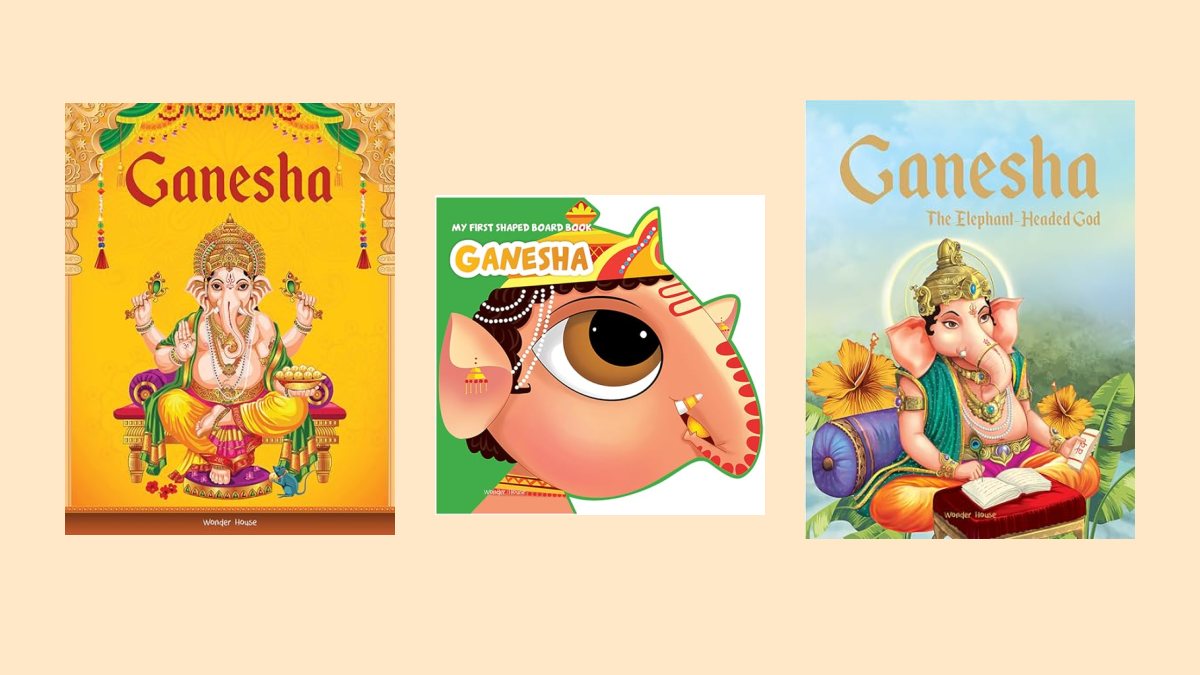
- My First Shaped Board Book: Lord Ganesha, a sturdy board book cut in the shape of Ganesha, made for small hands.
- My First Gods Board Book Combo, with Ganesha, Krishna, Hanuman, Shiva and Durga board books together.
For young readers (age 4 to 8)
- Tales from Ganesha For Children, a colourful collection of Ganesha stories with simple text.
- Stories of Ganesha (Deluxe Silk Hardbound), a beautiful hardbound edition that makes a lovely Diwali gift.
- Ganesha's Gifts, a picture book about the god of wisdom.
- Ganesha: The Elephant Headed God, illustrated stories from Indian mythology for children who are starting to read on their own.
Ganesha books in Hindi
- Ganesha: Illustrated Story Book for Children in Hindi, for children reading in Hindi.
- Ganesha: Illustrated Stories in Hindi, from the same illustrated mythology series as the English edition.
- Sachitra Shri Ganesh Chalisa, an illustrated Ganesh Chalisa to read together during puja.
- Shri Ganesh Charitra Ewam Chalisa (Deluxe Silk Hardbound), Ganesha's life story and Chalisa in one deluxe volume.
Mythology sets and combos
Children who love Ganesha usually want to hear about his family and the other gods next. These sets are great value and make wonderful festive gifts.
- Tales from Indian Mythology Combo, with Krishna, Ganesha, Hanuman, Rama and Shiva.
- Pauranik Kahaniyan Combo (Hindi), the same five gods in Hindi.
- Illustrated Stories From Indian Mythology Combo, with Ganesha, Krishna and Shiva.
- Children's First Mythology Stories, Pack of 5, with Ram, Shiva, Hanuman, Ganesha and Vishnu.
- Tales from Indian Mythology (Collection of 10 Books), a complete starter library of Indian mythology.
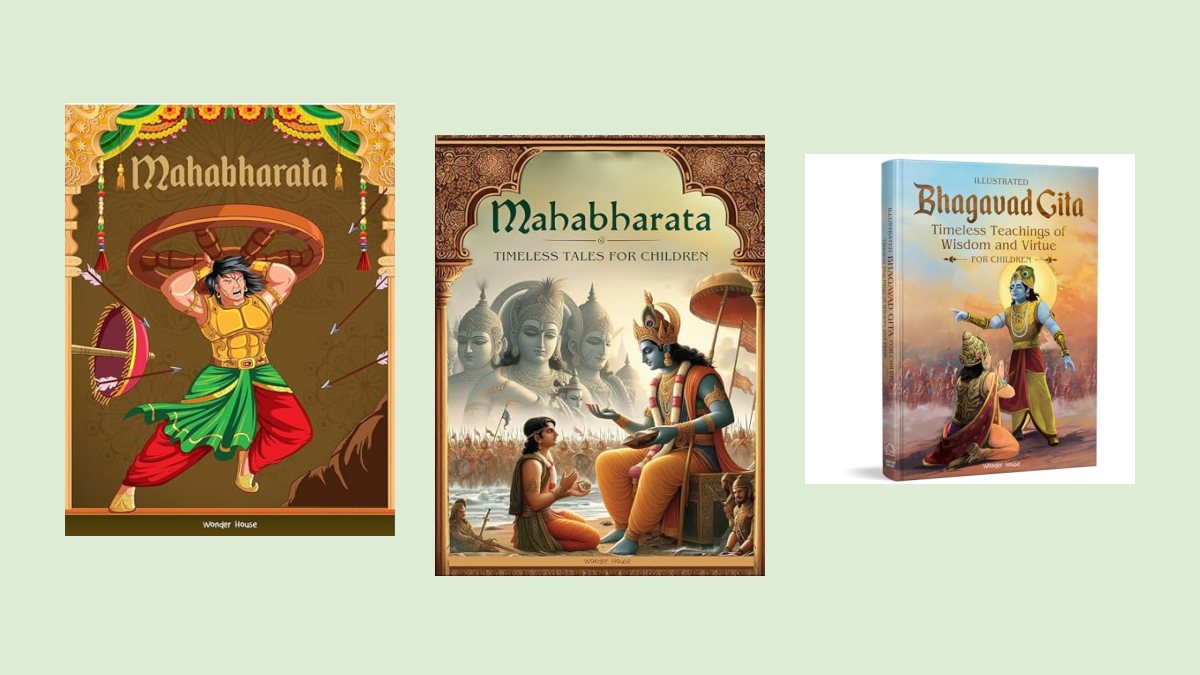
- Tales from Mahabharat For Children, the great story that Ganesha wrote down for Vyasa.
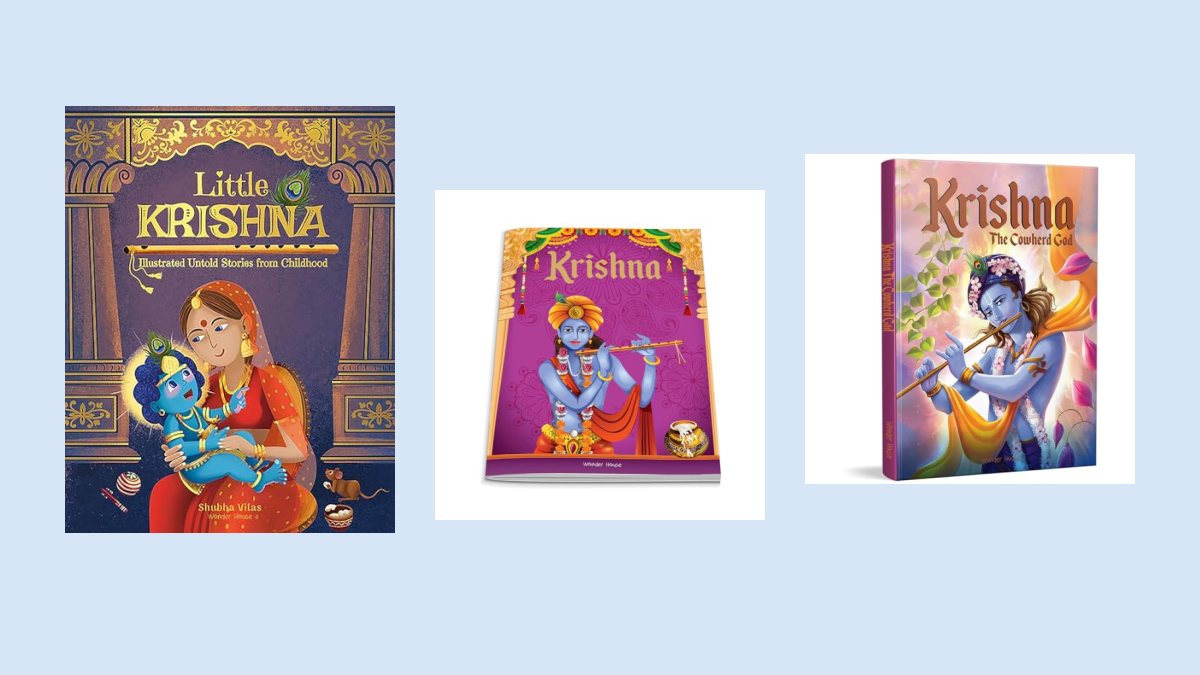
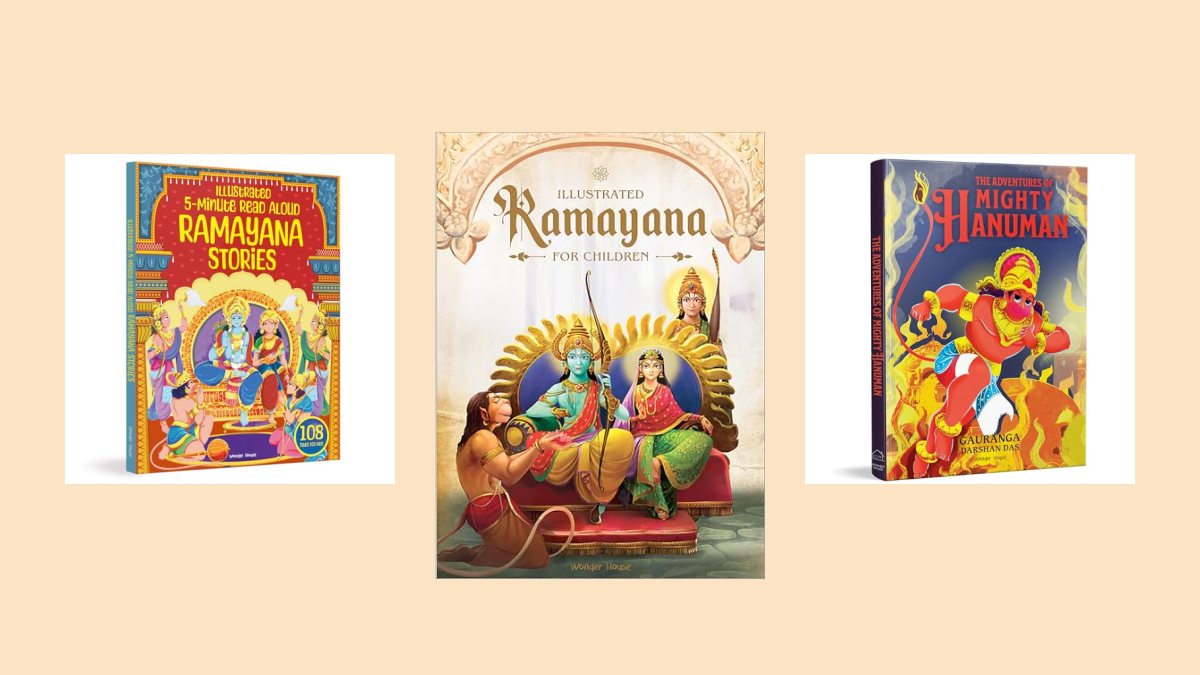
For more festive reading, try our Ramayana story for kids and Krishna stories for kids, or browse all our story books for kids.
Frequently asked questions
What age are Ganesha stories suitable for? Toddlers from age two enjoy board books with bright pictures of Ganesha and his mouse. From about four, children love hearing the short stories read aloud, and by seven or eight most can read illustrated Ganesha story books on their own.
Why is Ganesha worshipped first? Ganesha is the remover of obstacles. In the story of his elephant head, Shiva blessed him to be worshipped before every other god, so prayers and new beginnings start with him.
Why is Ganesha worshipped on Diwali? On Diwali, families worship Goddess Lakshmi for wealth and Lord Ganesha for wisdom, so that good fortune is used wisely. That is why Lakshmi and Ganesha idols are placed side by side for the puja.
Which Ganesha story is best for bedtime? The race around the world and Kubera's feast are gentle and funny, so they make the best Ganesha stories for bedtime. The elephant head story is better told in the daytime for very young children.
Where can I buy Ganesha books for kids? You can buy books online at BooksFactory with cash on delivery, including Ganesha story books, board books, Hindi editions and Indian mythology sets for children.
Start with one story tonight
Pick your child's favourite of these seven Ganesha stories for kids and read it aloud tonight. Make Mooshak squeak, let the modaks roll, and give the Moon a cheeky laugh. Children who grow up with these stories of Ganesha carry their lessons of wisdom, humility and kindness for life. Happy reading, and Happy Diwali.
0 Comments
Be the first to comment on this post.