

Blog Article
Ask any parent or teacher in India what children should read first, and the answer is nearly always the same: moral stories. A good moral story is short, has a clear beginning and end, usually stars a talking animal, and leaves the child with one simple idea to carry into real life. That is why the same handful of short stories has been told at bedtime, in classrooms and in school assemblies for generations.
This guide brings together ten of the best moral stories for kids in simple English. Each one is short enough to tell in five minutes, and each comes with its moral and a question you can ask your child afterwards. At the end you will find tips on how to tell these stories well and which moral story books are worth keeping at home.
Why moral stories work so well for children
Children do not learn values from lectures. Tell a five year old to be honest and the word slides past. Tell the same child about a woodcutter who refused a golden axe because it was not his, and the idea stays for years. Stories give children a picture to hang the lesson on.
- They are short. Most moral stories fit inside a young child's attention span, which makes them perfect for bedtime or a quick read before school.
- They build language. Short stories in English with simple sentences are one of the easiest ways to grow vocabulary and listening skills.
- They start conversations. "What would you have done?" is a question children love to answer.
- They are easy to retell. A child who can retell a story in their own words is practising memory, sequence and speaking, all at once.
1. The Lion and the Mouse
A lion was sleeping in the forest when a little mouse ran across his nose and woke him. The angry lion caught the mouse under his paw. "Please let me go," squeaked the mouse. "One day I may help you." The lion laughed at the idea that a tiny mouse could help the king of the forest, but he let him go. A few days later the lion was caught in a hunter's net. He roared and pulled but could not get free. The mouse heard him, ran over and chewed through the ropes one by one until the lion was free.
Moral: No one is too small to help. Kindness is never wasted.
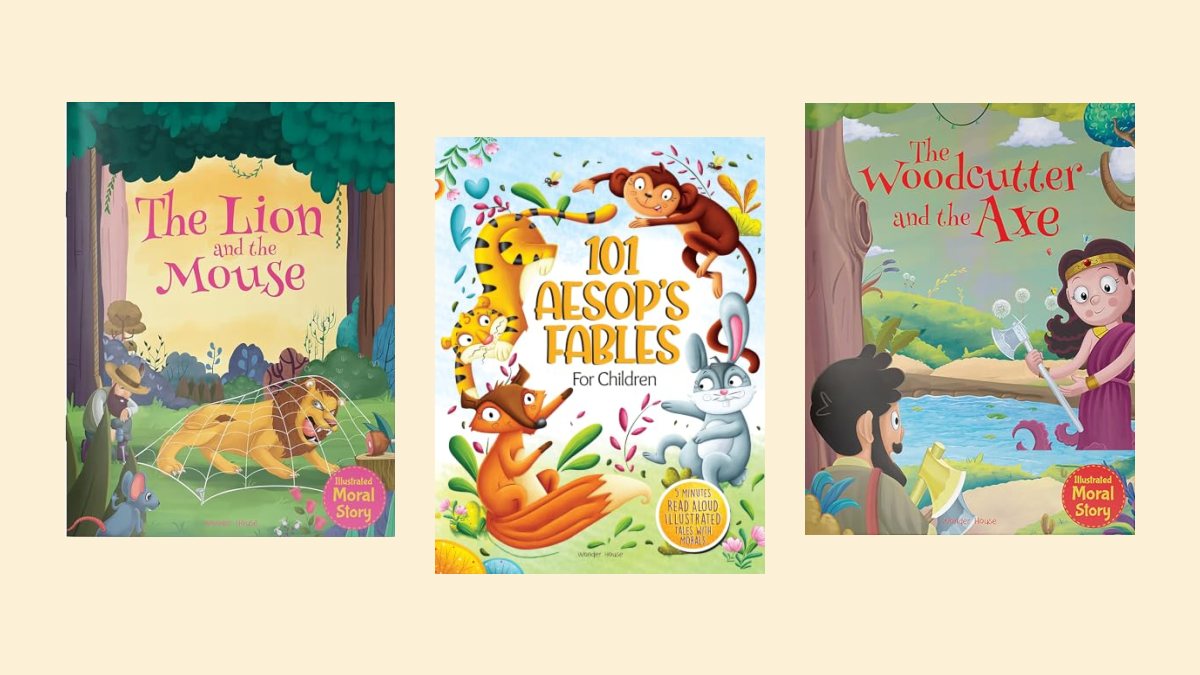
Ask your child: Who is someone small who has helped you? You can read the full picture book version in The Lion and the Mouse.
2. The Thirsty Crow
On a hot summer day a crow flew all over looking for water. At last he found a pot in a garden, but the water was so low that his beak could not reach it. He tried to push the pot over, but it was too heavy. Then he noticed some pebbles lying nearby. He picked them up one at a time and dropped them into the pot. Slowly the water rose, until the crow could drink.
Moral: Where there is a will, there is a way. Think before you give up.
Ask your child: What else could the crow have tried?
3. The Hare and the Tortoise
A hare was always boasting about how fast he could run and made fun of the slow tortoise. Tired of the teasing, the tortoise challenged him to a race. The hare shot ahead and was soon so far in front that he decided to take a nap under a tree. The tortoise kept walking, step after step, without stopping. When the hare woke up, the tortoise was crossing the finish line.
Moral: Slow and steady wins the race. Do not be overconfident.
Ask your child: Why did the hare lose, even though he was faster?
4. The Ant and the Grasshopper
All summer long a grasshopper sang and danced in the sun while an ant worked hard, carrying grain to her home. "Come and play," said the grasshopper. "There is plenty of food." The ant shook her head and kept working. When winter came the fields were bare and cold. The grasshopper had nothing to eat, while the ant was warm and well fed.
Moral: Work today for what you will need tomorrow.
Ask your child: Should the ant share her food with the grasshopper? This one always starts a good discussion. The illustrated version is The Ant and the Grasshopper.
5. The Boy Who Cried Wolf
A shepherd boy was bored while watching the village sheep. For fun he shouted, "Wolf! Wolf!" The villagers came running, found no wolf, and the boy laughed at them. He played the same trick again the next day. Then one evening a real wolf came. The boy shouted as loudly as he could, but this time nobody came, because nobody believed him.
Moral: If you tell lies, people will not believe you even when you tell the truth.
Ask your child: How could the boy win back the villagers' trust?
6. The Honest Woodcutter
A poor woodcutter was cutting a tree by a river when his axe slipped and fell into the water. He sat down and wept, for it was the only axe he had. A river spirit appeared and brought up a golden axe. "Is this yours?" The woodcutter said no. The spirit brought up a silver axe. Again he said no. Finally the spirit brought up his old iron axe, and the woodcutter said happily, "That one is mine." Pleased with his honesty, the spirit gave him all three.
Moral: Honesty is the best policy.
Ask your child: Would it have been easy to say yes to the golden axe? Read it together in The Woodcutter and the Axe.
7. The Goose That Laid the Golden Egg
A farmer and his wife owned a wonderful bird that laid one golden egg every morning. They sold the eggs and soon became comfortable. But they grew greedy. "If she lays a golden egg every day, she must be full of gold," they thought. They cut the bird open to get all the gold at once and found nothing inside. Now they had no bird and no more golden eggs.
Moral: Greed destroys what you already have.
Ask your child: What should the farmer have done instead? The picture book is The Golden Egg.
8. The Bear and the Two Friends
Two friends were walking through a forest and had promised to stand by each other in danger. Suddenly a bear appeared. One friend quickly climbed a tree and left the other behind. The second friend could not climb, so he lay on the ground and held his breath, because he had heard that bears do not touch the dead. The bear sniffed near his ear and walked away. The friend came down from the tree and asked, "What did the bear whisper to you?" The other replied, "He told me not to trust a friend who runs away in trouble."
Moral: A friend in need is a friend indeed.
Ask your child: What makes someone a good friend? See The Bear and the Two Friends.
9. The Fox and the Goat
A fox fell into a well and could not climb out. After some time a thirsty goat looked in and asked if the water was good. "It is the sweetest water I have ever tasted," said the clever fox. "Jump in and try it." The goat jumped in without thinking. At once the fox climbed on the goat's back, leapt out of the well and ran off, leaving the goat stuck inside.
Moral: Look before you leap. Do not trust advice from someone who is in trouble himself.
Ask your child: What question should the goat have asked first? The illustrated book is The Fox and the Goat.
10. King Midas and the Golden Touch
King Midas loved gold more than anything in the world. One day he was granted a wish, and he asked that everything he touched should turn to gold. At first he was delighted. Then he sat down to eat, and his bread and fruit turned to gold. When his little daughter ran to hug him, she too became a golden statue. Heartbroken, Midas begged for the gift to be taken away, and he never wished for gold again.
Moral: Be careful what you wish for. People matter more than riches.
Ask your child: If you had one wish, what would you choose? Read The Golden Touch of Midas.
How to tell a moral story so that it sticks
- Do not announce the moral first. Tell the story, pause, and ask the child what they think it means. Their answer is often better than the one printed in the book.
- Use voices. A deep roar for the lion and a squeak for the mouse turns a two minute story into the best part of the day.
- Repeat favourites. Children ask for the same story again and again because repetition is how they learn it by heart.
- Let them tell it back. After three or four readings, swap places. Let your child be the storyteller.
- Connect it to real life, gently. "Remember the thirsty crow?" works far better than a scolding when a child wants to give up on homework.
Best moral story books to keep at home
One story a night adds up quickly, so it helps to have a few collections on the shelf. These are the ones parents pick most often from our children's story books section.
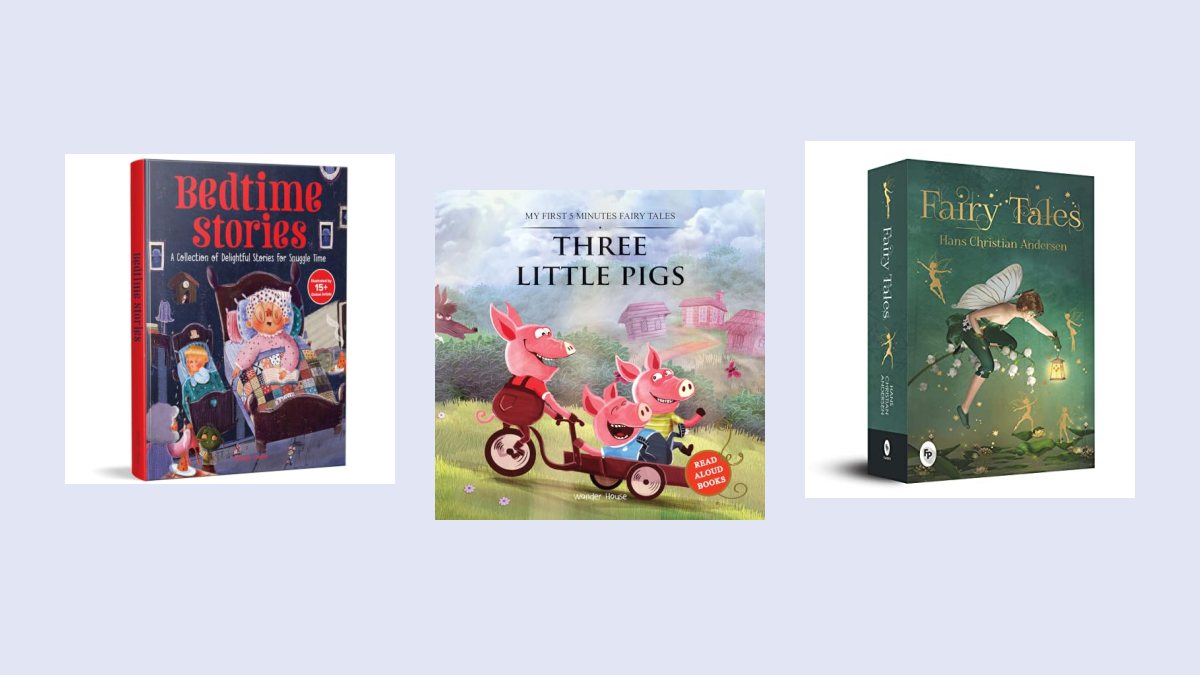
- For ages 4 to 6: single story picture books with large pictures and a few lines per page, such as the titles linked above. If you want a set, Illustrated Moral Stories (Collection of 10 Books) covers ten classic tales in one box, and Moral Stories - Storytime is a handy four stories in one book.
- For ages 5 to 8: The Illustrated Moral Tales and The Illustrated Jataka Tales are good read aloud books that children can later read on their own.
- For ages 6 and above: 101 Aesop's Fables For Children gives you a new five minute story for more than three months of bedtimes.
- For older children and the family shelf: the full text Aesop's Fables.
If your child enjoys animal stories from India, read our guide to Panchatantra stories for kids next. And if you are not sure which kind of book suits your child's age, see best books for kids by age.
Common questions
At what age can I start telling moral stories? You can begin around age three with very short stories and lots of pictures. From four onwards most children can follow all ten stories on this page.
Should I read in English or in my mother tongue? Both. Tell the story in the language your child understands best, then read the English version. Knowing the story already makes the English words easy to follow.
How long should a story session be? Five to ten minutes is enough. A short story every day does more than a long session once a week.
My child only wants one story again and again. Is that fine? Yes. It means the story is working. Add a new one alongside it rather than replacing it.
Start with one story tonight
You do not need a plan or a reading list to begin. Pick one story from this page, tell it at bedtime, and ask one question at the end. Do the same tomorrow. Within a month your child will know ten stories, ten morals and a good number of new English words, and you will have a bedtime habit that both of you look forward to. When you are ready for more, browse the full range of story books for kids at BooksFactory.

0 Comments
Be the first to comment on this post.