-
Fiction

- Romance
- Historical Fiction
- Crime & Mystery
- Modern Fiction (Post 1945)
- Religious & Spiritual
- Fiction-Related Item
- Fantasy
- Adventure
- Classic Fiction (Pre 1945)
- Fiction: Special Features
- Thriller / Suspense
- Science Fiction
- Philosophy
- Horror & Ghost Stories
- Graphic Novels
- Myth & Legend
- Sagas
- Poetry Anthology
- Erotic Fiction
- Society & Culture
- Film, TV & Radio
- Humour
-
Non-Fiction
Non-Fiction 13 categories · 2,996 booksView all
-
Teens & Ya
Teens & Ya 3 categories · 162 booksView all
-
Kids
- Picture Books
- Early Learning
- Fiction & True Story
- Picture & Activity Books
- General Non-Fiction
- Stationery & Misc
- Personal & Soc Issue
- Reference Material
- Fantasy
- Educational Material
- Modern Fiction (Post 1945)
- Horror
- Biography: General
- Graphic Novels
- Poetry Anthology
- Science Fiction
- Humour
- Myth & Legend
-
EXAMS
-
Shop by Age
-
Kids Books
-
Biography

















-
Fiction
- Romance
- Historical Fiction
- Crime & Mystery
- Modern Fiction (Post 1945)
- Religious & Spiritual
- Fiction-Related Item
- Fantasy
- Adventure
- Classic Fiction (Pre 1945)
- Fiction: Special Features
- Thriller / Suspense
- Science Fiction
- Philosophy
- Horror & Ghost Stories
- Graphic Novels
- Myth & Legend
- Sagas
- Poetry Anthology
- Erotic Fiction
- Society & Culture
- Film, TV & Radio
- Humour
-
Non-Fiction
Non-Fiction 13 categories · 2,996 booksView all
-
Teens & Ya
Teens & Ya 3 categories · 162 booksView all
-
Kids
- Picture Books
- Early Learning
- Fiction & True Story
- Picture & Activity Books
- General Non-Fiction
- Stationery & Misc
- Personal & Soc Issue
- Reference Material
- Fantasy
- Educational Material
- Modern Fiction (Post 1945)
- Horror
- Biography: General
- Graphic Novels
- Poetry Anthology
- Science Fiction
- Humour
- Myth & Legend
-
EXAMS
-
Shop by Age
-
Kids Books
-
Biography
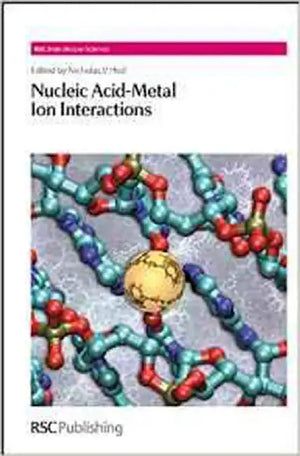
Nucleic Acid-Metal Ion Interactions
About the Book Natural biochemical processes are routinely being discovered in living cells that involve RNA. Some of these processes, such...
₹18552.00
Hardcover
inclusive of all taxes · free delivery
Out of Stock
Cash on Delivery
Guaranteed Service
4 to 7 Business Days
Check Delivery Free delivery on all orders
Offers on this product
Coupon Code: BOOK10
Get 10% off
.
About the Book
About the Book Natural biochemical processes are routinely being discovered in living cells that involve RNA. Some of these processes, such as RNA interference, are now being exploited for biotechnology and medicinal applications. DNA has also proven in recent years to be more than a passive storehouse of information. For example, non-B-form DNA structures formed by G-rich DNA have been shown to participate in the regulation of gene expression, a discovery that presents new possibilities for drug targets in the genome. The current quest to understand how nucleic acid functions at the most fundamental level requires that we have a detailed understanding of nucleic acid-metal ion interactions. Because RNA and DNA are polyanions the structure and biological function of these biopolymers depends strongly on their association with metal ions. While this intimate connection between metal ions and nucleic function has been appreciated for decades, the noncovalent and dynamic nature of these interactions has continually presented challenges to the development of accurate and quantitative descriptions. Over the past few years the development of solution state spectroscopic techniques and the achievement of high resolution X-ray crystal structures have provided tremendous insights into the nature of nucleic acid-metal ion interactions, including direct evidence for their importance in determining nucleic acid structure, from the dictation of folding pathways followed by large RNA molecules to the subtle modulation of DNA groove widths. This new book provides a comprehensive review of the experimental studies that define our current understanding of nucleic acid-metal ion interactions with a particular emphasis being placed on experimental biophysical studies. However, the book is not merely a current review of the literature, as original material and fresh perspectives on published results are also presented. Particularly noteworthy topics include: -The chapter by Williams and fellow workers which reviews information provided by x-ray crystal structures and discusses what this information has revealed about the unique nature of Mg2+ interactions with RNA phosphate groups. The authors provide fresh insights, based upon structural comparisons, for how these interactions govern the local folding pathways of RNA. By dedicating separate chapters to the participation of metal ions in the kinetics and thermodynamics of RNA folding, this volume provides a more in depth treatise of both areas than is typically possible for reviews in which these two related, but distinct, topics are combined -Polyelectrolyte models of nucleic acids have proven to be extremely valuable for understanding the sequestering counterions in a so-called diffuse cloud around polymeric DNA. J. Michael Schurr provides a comprehensive review of polyanion models. Despite the success of polyelectrolyte models in describing some physical properties of nucleic acids, this topic is not always sufficiently understood by many researchers to make use of these models and this chapter serves as a valuable and up to date introduction to this topic. -The chapter by Pizarro and Sadler on metal ion-nucleic acid interactions in disease and medicine is complemented by a chapter by Lippert on coordinative bond formation between metal ions and nucleic acid bases. Together, these two chapters provide an overview of transition metal ion interactions with nucleic acids that illustrates the promise and peril that is associated with direct metal ion coordination to nucleic acid bases in living cells. The book is sufficiently detailed to serve as a reference source for researchers active in the field of nucleic acids biophysics and molecular biology. In addition, chapter authors have added introductory material and enough background material in each chapter so that the book can also can serve as an entry point for students and researchers that have not previously worked in the field which will make the book of lasting value and more accessible by a wider audience.
read more
Edition
N/A
Language
English
Publisher
Royal Society of Che
Binding
Hardcover
ISBN-13
9780854041954
Weight
N/A
Dimension
N/A
Premium Quality
Easy Return
Certified Product
Secure Checkout
Money Back Guarantee
On Time Delivery




Recently Viewed Books








Product Details
ISBN-139780854041954
PublisherRoyal Society of Che
BindingHardcover
LanguageEnglish
AuthorNicholas V. Hud
Edition
Dimensions
Weight
How would you rate your experience shopping for books on Books Factory?
Very poor
Neutral
Great
Rating Snapshot
Select a row to filter reviews.
5
0
4
0
3
0
2
0
1
0
0 Reviews
No reviews yet. Be the first to review this book.
Add a Review
Only customers who've purchased this book can write a review. Buy it, and you'll be able to review it from here or from your order in My Account.