-
Fiction

- Romance
- Historical Fiction
- Crime & Mystery
- Modern Fiction (Post 1945)
- Religious & Spiritual
- Fiction-Related Item
- Fantasy
- Adventure
- Classic Fiction (Pre 1945)
- Fiction: Special Features
- Thriller / Suspense
- Science Fiction
- Philosophy
- Horror & Ghost Stories
- Graphic Novels
- Myth & Legend
- Sagas
- Poetry Anthology
- Erotic Fiction
- Society & Culture
- Film, TV & Radio
- Humour
-
Non-Fiction
Non-Fiction 13 categories · 2,996 booksView all
-
Teens & Ya
Teens & Ya 3 categories · 162 booksView all
-
Kids
- Picture Books
- Early Learning
- Fiction & True Story
- Picture & Activity Books
- General Non-Fiction
- Stationery & Misc
- Personal & Soc Issue
- Reference Material
- Fantasy
- Educational Material
- Modern Fiction (Post 1945)
- Horror
- Biography: General
- Graphic Novels
- Poetry Anthology
- Science Fiction
- Humour
- Myth & Legend
-
EXAMS
-
Shop by Age
-
Kids Books
-
Biography












-
Fiction
- Romance
- Historical Fiction
- Crime & Mystery
- Modern Fiction (Post 1945)
- Religious & Spiritual
- Fiction-Related Item
- Fantasy
- Adventure
- Classic Fiction (Pre 1945)
- Fiction: Special Features
- Thriller / Suspense
- Science Fiction
- Philosophy
- Horror & Ghost Stories
- Graphic Novels
- Myth & Legend
- Sagas
- Poetry Anthology
- Erotic Fiction
- Society & Culture
- Film, TV & Radio
- Humour
-
Non-Fiction
Non-Fiction 13 categories · 2,996 booksView all
-
Teens & Ya
Teens & Ya 3 categories · 162 booksView all
-
Kids
- Picture Books
- Early Learning
- Fiction & True Story
- Picture & Activity Books
- General Non-Fiction
- Stationery & Misc
- Personal & Soc Issue
- Reference Material
- Fantasy
- Educational Material
- Modern Fiction (Post 1945)
- Horror
- Biography: General
- Graphic Novels
- Poetry Anthology
- Science Fiction
- Humour
- Myth & Legend
-
EXAMS
-
Shop by Age
-
Kids Books
-
Biography
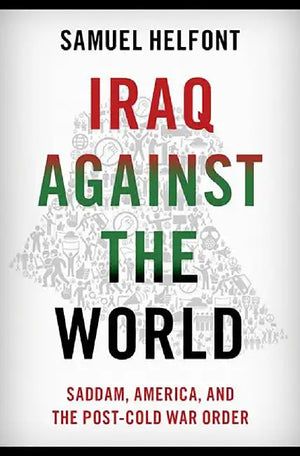
Iraq against the World: Saddam, America, and the Post-Cold War Order
The move away from post-Cold War unipolarity and the rise of revisionist states like Russia and China pose a rapidly escalating and confound...
₹1100.00
Hardcover
inclusive of all taxes · free delivery
Out of Stock
Cash on Delivery
Guaranteed Service
4 to 7 Business Days
Check Delivery Free delivery on all orders
Offers on this product
Coupon Code: BOOK10
Get 10% off
.
About the Book
The move away from post-Cold War unipolarity and the rise of revisionist states like Russia and China pose a rapidly escalating and confounding threat for the liberal international order. In Iraq against the World, Samuel Helfont offers a new narrative of Iraqi foreign policy after the 1991 Gulf War to argue that Saddam Hussein executed a political warfare campaign that facilitated this disturbance to global norms. Following the Gulf War, the UN imposed sanctions and inspections on the Iraqi state--conditions that Saddam Hussein was in no position to challenge militarily or through traditional diplomacy. Hussein did, however, wage an influence campaign designed to break the unity of the UN Security Council. The Iraqis helped to impede emerging norms of international cooperation and prodded potentially revisionist states to act on latent inclinations to undermine a liberal post-Cold War order.
Drawing on internal files from the ruling Ba'th Party, Helfont highlights previously unknown Iraqi foreign policy strategies, including the prominent use of influence operations and manipulative statesmanship. He traces Ba'thist operations around the globe--from the streets of New York and Stockholm, to the mosques of Pakistan and Saudi Arabia, to the halls of power in Paris and Moscow. Iraqi Ba'thists carried out espionage, planted stories in the foreign press, established overt and covert relations with various political parties, and attempted to silence anyone who disrupted their preferred political narrative. They presented themselves simply as Iraqis concerned about the suffering of their friends and families in their home country, and, consequently, were able to assemble a loose political coalition that was unknowingly being employed to meet Iraq's strategic goals. This, in turn, divided Western states and weakened norms of cooperation and consensus toward rules-based solutions to international disputes, causing significant damage to liberal internationalism and the institutions that were supposed to underpin it. A powerful reconsideration of the history of Iraqi foreign policy in the 1990s and the early 2000s, Iraq against the World offers new insights into the evolution of the post-Cold War order.
Edition
N/A
Language
English
Publisher
Oxford UP
Binding
Hardcover
ISBN-13
9780197530153
Weight
N/A
Dimension
N/A
Premium Quality
Easy Return
Certified Product
Secure Checkout
Money Back Guarantee
On Time Delivery
Related Products



Recently Viewed Books





Product Details
ISBN-139780197530153
PublisherOxford UP
BindingHardcover
LanguageEnglish
AuthorSamuel Helfont
Edition
Dimensions
Weight
How would you rate your experience shopping for books on Books Factory?
Very poor
Neutral
Great
Rating Snapshot
Select a row to filter reviews.
5
0
4
0
3
0
2
0
1
0
0 Reviews
No reviews yet. Be the first to review this book.
Add a Review
Only customers who've purchased this book can write a review. Buy it, and you'll be able to review it from here or from your order in My Account.